Global agricultural leaders and policymakers are increasingly positioning artificial intelligence (AI) as a pivotal driver of efficiency, resilience, and sustainability in modern farming systems. Amid intensifying climate variability, resource constraints, and food system pressures, AI-powered technologies are emerging as critical tools for optimizing productivity and reducing operational risk.
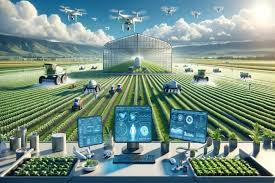
Recent discussions at international agricultural forums emphasized that AI applications—ranging from predictive analytics and remote sensing to autonomous machinery and decision-support systems—are reshaping farm management. Advanced algorithms can analyze satellite imagery, soil health metrics, and weather patterns in real time, enabling precision input application and improved yield forecasting.
Institutions such as the Food and Agriculture Organization have underscored the role of digital innovation in strengthening global food security. AI-driven advisory systems are helping farmers make data-informed decisions on irrigation scheduling, nutrient management, pest control, and crop rotation, ultimately improving resource-use efficiency.
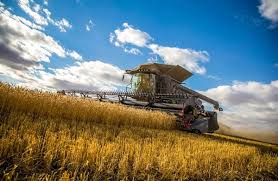
In parallel, private-sector investment in agri-tech platforms has accelerated. Smart machinery equipped with machine learning capabilities is enhancing operational accuracy, while AI-integrated supply chain analytics are improving traceability and market forecasting. These advancements are particularly relevant as climate change intensifies drought risks, extreme weather events, and pest outbreaks.
However, experts caution that equitable access remains a major challenge. Smallholder farmers in developing regions often face digital infrastructure gaps, limited connectivity, and affordability constraints. Bridging this technological divide will require coordinated public-private partnerships, training initiatives, and supportive regulatory frameworks.
As global food demand continues to rise alongside environmental constraints, AI is increasingly viewed not as an optional innovation but as a structural component of future-ready agriculture. Policymakers and industry stakeholders are expected to prioritize digital transformation strategies that enhance farm resilience, mitigate climate risks, and sustain long-term food production capacity.


 By
By