In the past year, Australia has witnessed a sharp surge in land clearing, raising serious concerns about the future of its native ecosystems. But amid this alarming trend, a wave of positive change is taking shape. From growing community involvement to policy reforms and success stories in land restoration, Australians are showing how a crisis can become a catalyst for change.
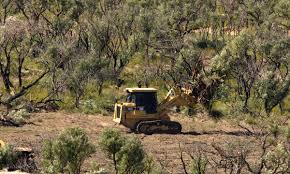
In 2023–24, more than 90,000 hectares of land were cleared across the country—much of it affecting areas critical to endangered wildlife. What’s particularly remarkable, however, is that this figure wasn’t uncovered by government agencies, but by more than 675 citizen scientists who volunteered their time to track land clearing using satellite images. Their work, supported and verified by the Australian Conservation Foundation (ACF), has not only brought the issue into the national spotlight but has also shown how public involvement can drive real impact.
The biggest concern is in New South Wales, where data reveals a 40% increase in land clearing over the past year, with over 66,000 hectares cleared—much of it without proper environmental approvals. This prompted strong criticism from environmental groups, with some accusing the state government of failing to protect biodiversity. In response, however, the NSW government has begun to act. One of the first major steps was the official gazettal of the new Warranmadhaa (Georges River Koala National Park), covering 962 hectares of important koala habitat. The government also committed $48 million for managing and protecting this park, aiming to provide safer habitats for the rapidly declining koala population.
At the legislative level, reforms are also underway. The 2024 Biodiversity Offsets Scheme Amendment Bill was passed, aiming to tighten the rules around land clearing and improve accountability. The goal is no longer just to “offset” damage with artificial solutions, but to deliver net positive outcomes for biodiversity.
At the federal level, Australia’s Nature Positive Plan announced in 2022 is gaining momentum. Backed by over $40 million in funding through 2026, the plan sets ambitious national targets: protecting 30% of land and sea by 2030, halting the extinction of native species, and reversing environmental degradation.
The agricultural sector, often blamed for large-scale land clearing, is also making notable progress. The red meat industry has reduced its emissions by 78% since 2005, with a 40% drop just in the past year. This was made possible by improved land management, reduced deforestation, and growing consumer demand for ethically sourced products. Supermarket giants like Woolworths and ALDI have announced plans to eliminate beef linked to deforestation from their supply chains by the end of 2025—creating market incentives for farmers to adopt more sustainable practices.
Meanwhile, stories of successful bush regeneration are emerging across the country. In southeast NSW, a landholder who spent over a decade restoring a degraded property has reported the return of native animals including echidnas, lyrebirds, wallabies, and endangered bat species. What was once a dry, weed-infested field is now a thriving habitat full of life—proof that with patience and care, land can heal.
Large-scale conservation projects like Gondwana Link in Western Australia are also helping reconnect fragmented ecosystems. Spanning over 1,000 kilometers, the initiative brings together landowners, Indigenous groups, and conservationists to revegetate land, protect native species, and build a corridor where wildlife can move freely once again.
In all, while the recent surge in land clearing presents a sobering reality, it has also lit a fire under Australia’s environmental movement. With citizens stepping up, governments making key reforms, industries changing practices, and communities restoring damaged landscapes, there is a growing sense that Australia can still turn the tide.
Rather than being a story of loss, this could become a turning point—where the fight to protect Australia’s unique natural heritage gains new momentum, and where a crisis drives us toward a truly sustainable, nature-positive future.


 By
By