The Pradhan Mantri Fasal Bima Yojana (PMFBY) continues to gain momentum as one of India’s largest crop insurance initiatives, with a record 4.19 crore farmers enrolled in 2024–25, marking a 32% increase over 2022–23. The scheme, launched during the Kharif 2016 season, is now showing its strongest reach and impact to date.
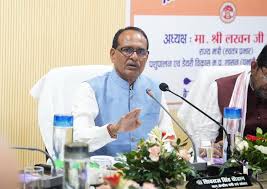
Minister of State for Agriculture and Farmers Welfare, Shri Ramnath Thakur, provided this update in a written reply in the Rajya Sabha today, detailing the Government’s ongoing efforts to make PMFBY more transparent, inclusive, and technology-driven.
Surge in Participation Among Small & Marginal Farmers
Of the farmers enrolled in 2024–25:
- 6.5% are tenant farmers
- 17.6% are marginal farmers
- 48% are loanee farmers
This increasing participation of vulnerable farming communities underscores the scheme’s expanding grassroots impact.
Key Reforms and Digital Innovations Under PMFBY
To further strengthen implementation and improve trust among stakeholders, the Government has introduced several systemic and technological interventions:
1. National Crop Insurance Portal (NCIP)
The NCIP serves as a central digital platform for farmer enrollment, subsidy management, and claim processing. It ensures direct bank transfers of claims and promotes transparency in scheme operations.
2. DigiClaim Module
Launched from Kharif 2022, DigiClaim enables real-time claim processing by integrating NCIP with the Public Financial Management System (PFMS) and insurance company systems. From Kharif 2024, a 12% penalty is auto-calculated for delays in claim settlement by insurance companies.
3. Escrow Account Mandate
From Kharif 2025, states must create ESCROW accounts for advance deposit of their premium share, helping ensure timely fund flow and claim processing.
4. Field-Level Technology for Yield Monitoring
- CCE Agri App: For collecting real-time crop yield data during Crop Cutting Experiments.
- Integration of land records with NCIP to verify farmer eligibility.
Awareness Campaigns to Reach Every Farmer
To promote awareness and educate farmers about the scheme:
- The Ministry has been conducting ‘Fasal Bima Saptah’ (Crop Insurance Week) since Kharif 2021.
- ‘Fasal Bima Pathshalas’ are organized at village level to teach farmers about claim processes and policy benefits.
- A nationwide campaign, ‘Meri Policy Mere Haath’, ensures physical delivery of insurance policy receipts directly to farmers.
New Technologies to Improve Accuracy and Transparency
The Government has adopted new-age tech tools to make crop damage assessment more scientific:
• YES-TECH:
A remote-sensing-based Yield Estimation System, which is being used from Kharif 2023 for paddy and wheat. From Kharif 2024, soybean has also been included. At least 30% of crop yield estimation must be based on YES-TECH models.
• WINDS:
Weather Information Network and Data System, aimed at expanding automatic weather stations fivefold. The collected weather data is integrated into yield models, crop damage assessments, and drought monitoring in partnership with IMD.
Pending Insurance Claims: A Mixed Picture
Despite these advances, the scheme still faces challenges in timely settlement of claims. As per data up to June 30, 2025, total pending claims under PMFBY and RWBCIS across India stand at ₹6,456.6 crore, with major backlogs in states like Madhya Pradesh (₹1,468.6 Cr), Rajasthan (₹1,525.2 Cr), and Andhra Pradesh (₹2,565.8 Cr).
Top States with Highest Pending Claims (2024–25):
- Andhra Pradesh: ₹2,565.8 Cr
- Rajasthan: ₹1,279.3 Cr
- Madhya Pradesh: ₹1,261.7 Cr
The Government has reiterated its focus on holding insurance companies accountable for delays, including enforcement of penalties and digitized tracking of claim timelines.
Conclusion
With growing enrollment, improved transparency, and increased use of technology, PMFBY is evolving into a more robust and inclusive crop insurance system. While challenges like delayed claims remain in certain states, the Government’s reforms aim to make the scheme more responsive and farmer-centric. Through integrated platforms like NCIP, innovations like YES-TECH, and on-ground campaigns such as Meri Policy Mere Haath, the Centre is striving to secure farmers against the uncertainties of agriculture in a rapidly changing climate.


 By
By