Engagement
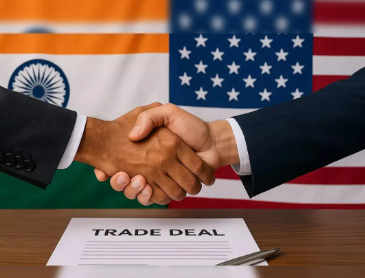
Despite ongoing concerns about rising tariffs and global trade tensions, recent developments in U.S. trade policy are beginning to show signs of a more strategic and constructive direction. While many of the trade barriers introduced in recent years still remain in place, the U.S. government has begun using them as leverage to negotiate significant deals with key global partners, signaling a shift from confrontation to cooperation.
Over the past year, the average applied U.S. tariff rate has jumped from roughly 2.5% to over 27%, the highest in nearly a century. Sectors such as steel, aluminum, and automotive manufacturing were hit particularly hard, with new tariffs ranging from 25% to 50%. These moves, introduced under emergency trade provisions, initially sparked concern among businesses and international partners. However, instead of triggering a full-scale trade war, the heightened tariffs have become tools for negotiation—paving the way for new agreements aimed at stabilizing trade relations while securing strategic advantages for the U.S. economy.
Some of the clearest outcomes have come from recent bilateral agreements. In July 2025, the U.S. signed breakthrough deals with Japan, the Philippines, Indonesia, and the European Union. These agreements replaced harsh proposed tariffs with more moderate reciprocal rates generally between 15% and 19% while opening foreign markets to American goods and attracting large-scale foreign investment. For example, in its deal with Japan, the U.S. agreed to scale back proposed 25% auto tariffs in exchange for expanded access to Japan’s agricultural and automotive markets, alongside a pledge from Japan to invest over $550 billion in the U.S. economy.
Similarly, new trade frameworks with the Philippines and Indonesia eliminated nearly all barriers to U.S. goods in those markets, offering fresh opportunities for American exporters in agriculture, industrial equipment, and food products. These nations, in turn, received reduced tariffs and assurances of mutual trade respect marking a positive turning point in Pacific relations.
One of the most impactful developments came from negotiations with the European Union. Despite earlier threats of sweeping penalties, both sides agreed on a 15% common tariff framework for most goods, while protecting key sectors like semiconductors, pharmaceuticals, agriculture, and digital services from broad restrictions. In return, the EU committed to purchasing $750 billion in U.S. energy exports and investing $600 billion in American infrastructure and clean energy projects through 2028.
These agreements have provided a much-needed sense of stability for markets. Following the announcements, major U.S. stock indexes surged, reflecting renewed investor confidence in the predictability of global trade. Businesses that had feared unpredictable tariff hikes are now cautiously optimistic about operating under clearer, rules-based arrangements.
Supporters of the current trade strategy argue that the administration’s approach is delivering real benefits. By using high tariffs as negotiating leverage, the U.S. has been able to extract investment pledges and improve market access while avoiding a full-blown collapse of international trade. In this view, tariffs are no longer simply barriers they are tools being used to level the playing field and protect domestic industries during critical transitions.
Moreover, the strategic focus on key sectors such as clean energy, semiconductors, agriculture, and pharmaceuticals is helping ensure that U.S. trade policy supports long-term economic competitiveness. Exemptions and carve-outs for these industries in recent deals allow American companies to grow exports without facing steep foreign retaliations.
Of course, challenges remain. Many of the agreements are still in the early stages, with some lacking formal legal implementation. Critics warn that ongoing tariffs raise consumer prices and business costs, potentially dampening growth in the long run. Legal challenges have also been filed against the emergency tariff authority used to impose some of the duties, and trade talks with China, Canada, and Mexico are still unresolved.
Nevertheless, the overall direction appears increasingly pragmatic. Rather than leaning into isolationism, the U.S. is using tough trade positions to drive targeted negotiations, deepen bilateral ties, and reshape the global economic order in ways that favor both American workers and long-term global stability.
In short, while U.S. trade barriers have not gone away, they are no longer merely obstacles—they are becoming instruments of strategy, signaling a more calculated and opportunity-focused approach to international trade in a shifting global landscape.


 By
By