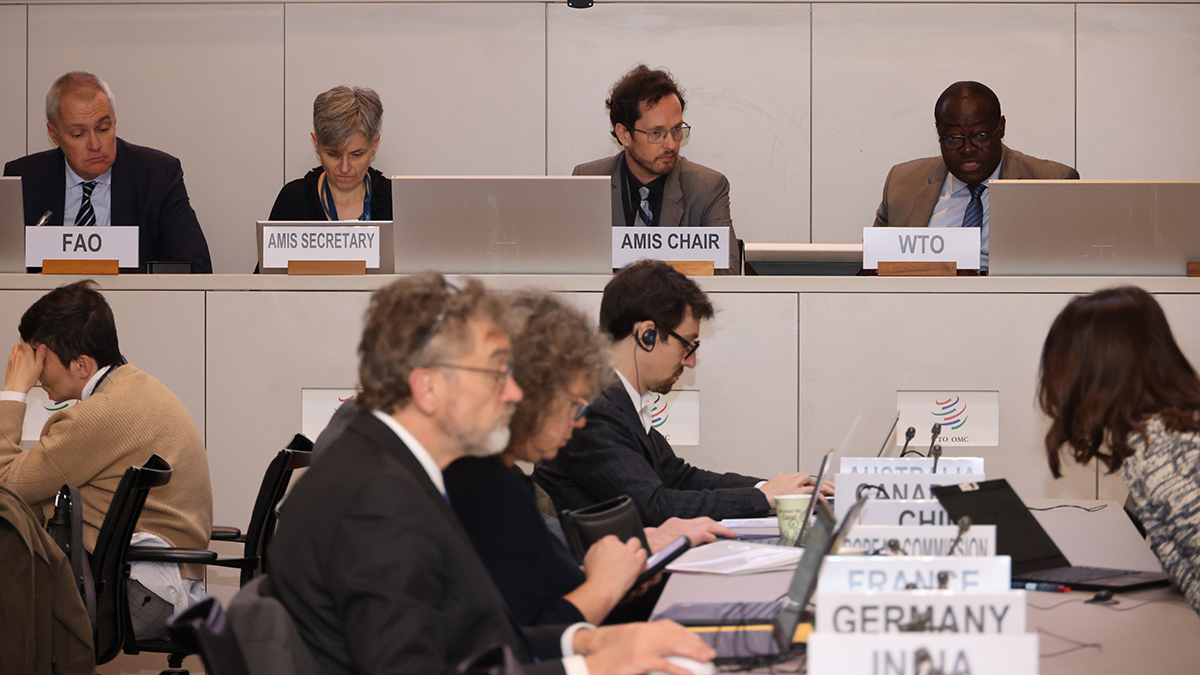
The Agricultural Market Information System (AMIS) has called for stronger transparency and improved data-sharing to ensure stability in global food markets. Meeting under the auspices of the World Trade Organization (WTO), officials, analysts, and member-country representatives emphasised that clear, timely, and reliable information is essential for reducing uncertainty in international agricultural trade.
During the discussion, AMIS experts noted that the past few years have shown how quickly markets can become unstable when accurate information is lacking. Sudden policy changes, unexpected supply disruptions, and geopolitical tensions have repeatedly triggered sharp price swings in key commodities such as wheat, maize, rice, and oilseeds. Transparent market data, they argued, helps countries anticipate trends, manage risk, and avoid damaging trade decisions.
Participants highlighted that strong cooperation between governments, international bodies, and private-sector actors is necessary to improve visibility across supply chains. More frequent reporting on production, stock levels, logistics, and trade flows would allow markets to function more predictably, reducing the likelihood of panic-driven export bans or large-scale hoarding.
The meeting also stressed the importance of strengthening early-warning systems. By using better analytical tools and harmonized reporting standards, AMIS aims to help countries detect emerging risks—such as droughts, conflicts, or price shocks—before they escalate into full-scale crises. Officials underlined that timely sharing of such alerts can support more coordinated responses and prevent disruptions from amplifying across global markets.
Additionally, members discussed ongoing efforts to build capacity in developing countries, enabling them to collect and submit more accurate agricultural data. Strengthening national statistical systems, they said, would not only benefit global monitoring efforts but also empower domestic policymakers to make better-informed decisions.
AMIS representatives concluded that transparency is not just a technical goal but a foundation for fair, stable, and predictable food trade. By enhancing information exchange and promoting trust between trading partners, the group believes the international community can better safeguard food security and reduce the risk of market volatility.
The meeting reaffirmed AMIS’s commitment to supporting global cooperation and ensuring that reliable market information remains a central pillar of the world’s agricultural trading system.


 By
By