Union Minister for Agriculture, Farmers’ Welfare, and Rural Development, Shivraj Singh Chouhan, informed the Rajya Sabha that under the leadership of Prime Minister Narendra Modi, the government has successfully advanced three core objectives: increasing agricultural production, reducing input costs, and ensuring fair prices for farmers. He emphasized that the government’s single guiding principle is the welfare of farmers.
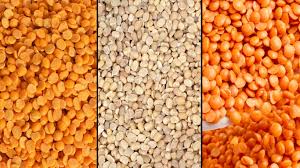
The Minister expressed deep pride in the Prime Minister’s leadership, noting that in 2019 the government took a landmark decision to fix the Minimum Support Price (MSP) at a level that guarantees farmers a minimum profit of 50 percent over their total cost of production. He announced that the government will now procure 100 percent of tur, masur, and urad, ensuring that farmers receive fully assured prices for these key pulse crops.
Responding to questions in Parliament, Chouhan reiterated that the government has fully implemented the Swaminathan Commission’s recommendations by purchasing crops at MSP calculated on comprehensive cost plus a 50 percent profit margin. He highlighted that procurement volumes before 2014—especially for pulses and oilseeds—were negligible compared to the current levels. He also referenced the PM-AASHA scheme, which has further strengthened the MSP-based procurement framework.
The Minister criticized certain state governments for inadequate procurement, which causes distress to farmers. To address this, the Centre has decided that if states fail to procure required quantities of tur, masur, or urad, agencies such as NAFED will directly procure these crops to ensure farmers receive the proper price.
Chouhan presented detailed comparative data, demonstrating the sharp rise in procurement under the current administration. Between 2004 and 2014, only 46.89 million metric tonnes of Kharif MSP crops were procured, whereas the Modi government has procured 81.86 million metric tonnes. Similarly, Rabi procurement increased from 23.02 million metric tonnes earlier to 35.40 million metric tonnes. Procurement of oilseeds grew from 4.7 million tonnes to 12.8 million tonnes, and pulses procurement surged dramatically from 0.6 million tonnes to 18.9 million tonnes.
He noted that agriculture remains the backbone of India’s economy and farmers are central to the nation’s progress. MSPs across crops—including paddy, jowar, bajra, ragi, tur, moong, urad, groundnut, sunflower, wheat, barley, chana, and mustard—have been significantly increased. Total MSP procurement in the previous decade stood at Rs 7.41 lakh crore, compared to Rs 24.49 lakh crore under the current government.
Referring to Karnataka’s procurement request for 2024–25, he mentioned that although the state sought approval for only 25 percent procurement, even that reduced target was not met. He reaffirmed that the government remains firmly committed to ensuring fair prices and stable incomes for farmers, stressing that fulfilling this commitment is its top priority.


 By
By