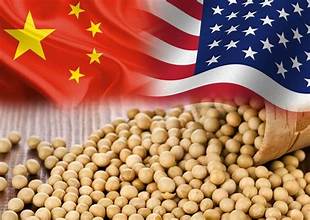
A major breakthrough appears to be emerging in the ongoing India–US trade negotiations, with American officials indicating significant progress in agricultural discussions. According to IANS, US Trade Representative Jamison Greer revealed that India has presented its “best-ever offer” regarding market access for American agricultural products.
Greer stated that the US negotiation team is currently in New Delhi, holding intensive discussions focused on improving market access for American farmers—especially for crops like sorghum and soybeans. The talks include the possibility of India opening its domestic market to these products for the first time.
He noted that while India remains cautious about certain sensitive crops, New Delhi has shown a stronger willingness this time to liberalize agricultural trade. “If India reduces tariffs on US products, the United States will reciprocate by lowering tariffs on Indian goods,” Greer said.
India Emerging as a Major Market for US Farm Goods
The US official highlighted that India could become a significant new market for American agricultural exports, particularly at a time when US farmers are struggling due to declining demand from China and excess grain stockpiles. Greer added that expanding access to countries like India is part of Washington’s broader strategy to diversify its global trade partnerships.
Beyond Agriculture: Other Trade Issues Also Progressing
Negotiations are not limited to agriculture. Greer confirmed that discussions on zero tariffs for aircraft parts under the 1979 Aircraft Agreement have moved forward substantially. A reciprocal tariff-cutting framework is also being considered—if India eases taxes on US imports, Washington will offer similar concessions.
US Senate Committee Chairman Jerry Moran further noted that India could become a major buyer of ethanol produced from American corn and soybeans. Greer hinted that several global markets, including the European Union, have already opened up to US ethanol and energy products, with potential commitments reaching $750 billion in the coming year.


 By
By