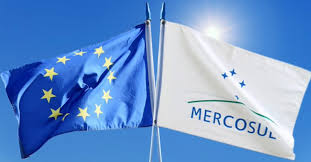
The European Union has delayed the long-awaited trade agreement with the Mercosur bloc, citing mounting opposition from European farmers and political leaders over environmental and economic safeguards. The EU–Mercosur deal, 26 years in the making, was set to create one of the world’s largest free-trade areas, covering around 780 million people and representing approximately a quarter of global GDP.
Concerns raised by European stakeholders include the potential impact on local agricultural markets, environmental sustainability, and enforcement of regulatory standards. Farmer unions and policymakers have voiced apprehensions that the agreement could lead to increased competition from South American agricultural imports, potentially affecting domestic production and rural livelihoods.
The postponement is likely to reshape trade dynamics, prompting Mercosur countries—Argentina, Brazil, Paraguay, and Uruguay—to explore alternative trade partnerships and alliances. Analysts suggest that delays could affect strategic investment plans and may influence global supply chains in sectors such as agriculture, automotive, and manufacturing.
While both the EU and Mercosur have expressed a desire to continue negotiations, the current political and economic tensions underscore the challenges of balancing trade liberalization with domestic interests and sustainability commitments. The future of this historic agreement remains uncertain, with stakeholders awaiting further clarity on timelines and potential revisions to address environmental and economic concerns.
This delay highlights the complex interplay between trade ambitions, domestic pressures, and global economic policy, signaling a cautious approach by the EU in implementing large-scale free-trade agreements.


 By
By