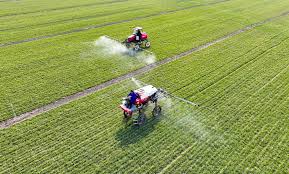
Advanced automation, artificial intelligence, and next-generation aerial systems took center stage at Rovensa Next’s 2nd Application Technology Workshop, held in Brazil’s western Bahia region. The event brought together farmers, consultants, and spraying professionals to demonstrate how emerging technologies are redefining precision, efficiency, and sustainability in crop protection.
Western Bahia, known for its large-scale farms, high production intensity, and challenging operating conditions, provided an ideal environment to showcase cutting-edge application systems. The workshop highlighted how automation and data-driven decision-making are increasingly central to modern agricultural spraying.
One of the key highlights was the presentation of Solinftec’s Solix autonomous robot, described as the first autonomous platform designed specifically for large-scale food production. The robot represents a shift from operator-dependent machinery to fully autonomous field operations, addressing labor shortages while ensuring consistent application parameters and repeatable performance.
Autonomous aerial concepts were also featured. Synerjet Agro presented AI-based agricultural aviation solutions aimed at reducing pilot variability and optimizing flight paths, application rates, and coverage through intelligent systems. Meanwhile, Moya Aero showcased its electric vertical takeoff and landing (eVTOL) aircraft, designed for multiple missions, including agricultural spraying. Powered by electricity, the aircraft offers lower environmental impact, reduced noise, and decreased maintenance requirements compared with conventional systems.
Heavy-lift drone technology attracted significant attention. Synerjet Agro introduced the Paica Pelican 2, with a 300-liter tank capacity and 18-meter spray width, while Drone LEM demonstrated the T100, currently the largest agricultural drone operating in western Bahia. These platforms address efficiency constraints of smaller drones by reducing refill frequency while preserving precision and access advantages.
Beyond hardware, the workshop emphasized integrated digital ecosystems. Embraer presented an intelligent platform linking application equipment with weather data, crop monitoring, and prescription maps to enable real-time, condition-based decision-making. Supporting technologies included mobile weather stations with DGPS connectivity and automated tank-mix preparation systems designed to reduce human error, particularly when handling complex mixtures.
Rovensa Next highlighted the importance of aligning application technology with product formulation, especially for biological inputs. Company representatives noted that advanced equipment and AI systems require stable, compatible formulations to ensure safe, drift-free, and effective applications.
The event also featured modern manned agricultural aircraft equipped with precision navigation and variable-rate systems, illustrating how traditional aviation continues to evolve alongside autonomous and unmanned solutions. Supported by regional producer associations and technical partners, the workshop served as a collaborative platform, reinforcing how AI, automation, and formulation science are converging to shape the future of agricultural spraying

 By
By