The American Soybean Association (ASA) has urged U.S. policymakers to strike a balanced approach as federal agencies move toward tighter restrictions on certain foreign-manufactured drones widely used in agriculture. The association warned that abrupt policy changes could place additional financial and operational pressure on farmers who rely on drone technology to remain competitive, efficient, and sustainable.
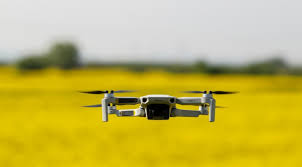
ASA said it is closely monitoring recent federal actions that could limit access to foreign-made drones, which currently account for the majority of agricultural drones in use across the United States. These tools play a critical role in precision agriculture, enabling farmers to monitor crop health, manage inputs, reduce costs, and improve decision-making. According to the association, restricting proven technologies without readily available domestic alternatives risks disrupting farm operations at a time when producers are already facing tight margins and market volatility.
ASA President Scott Metzger, an Ohio soybean farmer, emphasized that while national security concerns deserve careful consideration, policy decisions must reflect on-the-ground realities. He noted that removing established technologies from farmers’ operations without practical substitutes could increase costs and uncertainty, undermining productivity and sustainability goals.
The association has consistently supported policies that safeguard farmers’ access to modern agricultural technologies, including drones, broadband connectivity, GPS systems, and radio spectrum resources that underpin precision farming. ASA is calling on federal agencies and lawmakers to engage directly with agricultural stakeholders to address security risks while ensuring continued access to essential tools.
The policy debate follows recent actions by the U.S. Federal Communications Commission (FCC), which added certain foreign drone manufacturers and key components to its “Covered List,” citing national security concerns. The designation prevents affected companies from obtaining FCC authorization to sell new drone models or critical components in the U.S. market. The action aligns with earlier congressional directives that required a security review of specific foreign drone manufacturers.
Federal authorities have clarified that the FCC decision does not affect drones already authorized or purchased. Existing devices can continue to be used legally, and the designation does not ban the operation or resale of previously approved models. However, the restriction on new approvals could significantly affect future availability of agricultural drones, given the limited number of domestically manufactured alternatives currently on the market.
ASA stressed that a measured, coordinated policy approach is essential to avoid unintended consequences for farmers. The association maintains that addressing security concerns and supporting U.S. agriculture should be complementary objectives, not competing ones, and that preserving access to reliable precision tools is critical for the long-term competitiveness of American soybean producers.


 By
By