

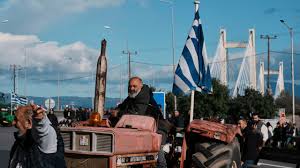
Farmers across Greece have launched 48-hour blockades on major highways, intensifying protests against soaring production costs and the proposed EU–Mercosur free trade agreement. The action marks a further escalation of unrest within the European agricultural sector, as producers in multiple member states express growing frustration over economic pressures and trade policy decisions.
Using tractors and farm equipment, farmers blocked key transport routes linking agricultural regions with urban markets and ports. Protesters say that persistent increases in fuel, fertiliser, electricity, animal feed, and irrigation costs have severely eroded farm profitability, leaving many operations struggling to remain viable. Small and medium-sized farms, which dominate Greek agriculture, are reported to be particularly vulnerable.
In addition to cost pressures, Greek farmers have voiced strong opposition to the EU–Mercosur trade pact, arguing that it would expose domestic producers to intensified competition from lower-cost agricultural imports from South America. Products such as beef, poultry, sugar, and grains are at the centre of farmers’ concerns, with producers warning that local markets could be destabilised if import volumes increase under preferential trade terms.
Farmer unions have also raised issues related to regulatory imbalance, noting that EU farmers are required to comply with stringent environmental, food safety, and animal welfare standards, which increase production costs. They argue that imports from Mercosur countries may not be subject to equivalent requirements, placing European producers at a structural disadvantage.
The Greek government has acknowledged the protests and entered discussions with farmer representatives. Authorities have indicated they will raise concerns at the EU level, particularly regarding safeguard measures, fair competition, and compensation mechanisms for vulnerable sectors. However, policy outcomes remain uncertain as negotiations on the trade agreement continue within the European Union.
The 48-hour blockades in Greece follow similar demonstrations by farmers in France and other EU countries, reflecting a broader wave of agricultural protests across Europe. Together, these actions highlight mounting pressure on policymakers to reconcile trade liberalisation objectives with farm income stability, food security, and the long-term sustainability of European agriculture.


 By
By











