

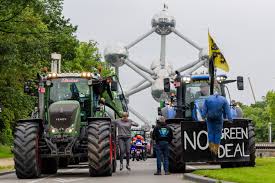
Farmers across several European countries have taken to the streets with tractors, staging large-scale demonstrations to protest against rising production costs, contested agricultural policies, and growing pressure from international trade agreements. Recent actions in France and Greece underscore a broader wave of rural unrest spreading across the European Union.
In France, convoys of tractors have blocked major highways and entered Paris, as farmers voice strong opposition to the proposed EU–Mercosur free trade agreement and what they describe as unfair competition from cheaper agricultural imports. French producers argue that strict EU environmental, animal welfare, and food safety regulations significantly raise their costs, while imported products may not be subject to equivalent standards. Alongside trade concerns, escalating expenses for fuel, fertilisers, feed, and energy have further squeezed farm margins.
Similar scenes have unfolded in Greece, where farmers launched 48-hour blockades on key highways linking agricultural regions to urban centres and ports. Greek producers say high input costs, particularly for fuel, electricity, and irrigation, have made farming increasingly unviable. The proposed EU–Mercosur trade pact has added to their concerns, with farmers warning that increased imports of beef, poultry, sugar, and grains could destabilise domestic markets and undermine local production.
Farmer unions across Europe are calling for stronger policy support, including fair pricing mechanisms, stricter enforcement of import standards, and effective safeguard measures in trade agreements. Many are also demanding targeted subsidies, tax relief, and compensation to offset rising costs and compliance burdens linked to sustainability and climate policies.
The protests reflect deeper structural challenges facing European agriculture, particularly for small and medium-sized family farms. While policymakers emphasise the importance of open trade, environmental protection, and climate resilience, farmers argue that current policies place disproportionate economic strain on rural livelihoods.
As demonstrations continue and spread, the unrest highlights the growing urgency for the European Union and national governments to strike a balance between trade ambitions, sustainability goals, and the economic viability of farming communities across Europe.


 By
By











