

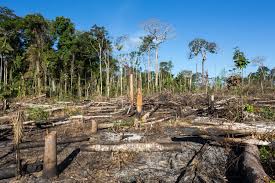
Brazil’s soy sector has taken a controversial step by withdrawing from the Amazon Soy Moratorium, a long-standing voluntary agreement that restricted the expansion of soy cultivation onto newly deforested land. The move has raised serious concerns among environmental groups, who warn it could accelerate both legal and illegal deforestation in one of the world’s most sensitive ecosystems.
The Amazon Soy Moratorium, established in 2006, was designed to curb deforestation by preventing traders from purchasing soy grown on land cleared after a specific cutoff date. Over nearly two decades, the agreement has been widely credited with reducing direct links between soy production and forest loss in the Amazon biome, while allowing agricultural output to grow through productivity gains and expansion onto already cleared land.
Leading representatives of Brazil’s soy industry argue that the moratorium has become outdated and restrictive. They claim it places disproportionate limitations on farmers operating legally under Brazil’s environmental laws, particularly the Forest Code, which already regulates land use and conservation requirements. Industry leaders have called for a regulatory framework that relies more heavily on national legislation rather than voluntary international agreements.
Environmental organisations, however, warn that the withdrawal could weaken oversight mechanisms and create incentives for further forest clearing. They stress that enforcement of environmental laws remains uneven in remote regions, and that the moratorium played a critical role in monitoring supply chains and discouraging deforestation linked to soy expansion.
Experts fear that the decision may also have broader implications for global supply chains, as international buyers and investors increasingly demand deforestation-free commodities. A rollback of commitments could expose Brazilian soy exports to reputational risks, potential trade barriers, and tighter scrutiny from markets with strict sustainability requirements.
Brazil is the world’s largest soy producer and exporter, supplying key markets across Asia and Europe. Any increase in deforestation linked to agricultural expansion could undermine climate commitments and threaten biodiversity, while also intensifying pressure on indigenous communities and traditional land users.
Government officials have stated that environmental protection remains a priority and that existing laws will continue to regulate land use. However, critics argue that the absence of the moratorium removes an important layer of accountability at a time when deforestation pressures are already rising.
As global attention remains focused on sustainable agriculture and climate action, the exit of Brazil’s soy industry from the Amazon Soy Moratorium is being seen as a pivotal moment. Its long-term impact will depend on enforcement, market responses, and whether alternative mechanisms can effectively prevent renewed forest loss in the Amazon region.


 By
By











