

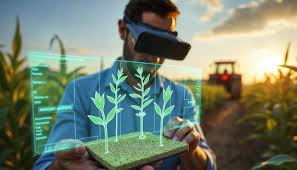
The global agriculture sector continues to undergo rapid technological transformation, with advances in artificial intelligence, robotics, and precision farming tools reshaping how food is produced, managed, and distributed across multiple countries.
Data from recent industry reports indicate that digital technologies are increasingly being adopted to improve productivity, manage risk, and enhance operational efficiency at both large-scale and smallholder farms. Artificial intelligence is playing a growing role in decision-making, enabling farmers to analyse weather patterns, soil conditions, and crop health with greater accuracy.
Precision agriculture tools, including GPS-guided machinery, sensor-based irrigation systems, and drone-based monitoring, are helping farmers optimise the use of inputs such as water, fertilisers, and pesticides. These technologies are reducing waste, lowering costs, and improving environmental outcomes while maintaining or increasing yields.
Robotics is also gaining traction, particularly in labour-intensive sectors such as horticulture and specialty crops. Autonomous machines are being used for tasks including planting, weeding, harvesting, and crop scouting, addressing labour shortages and improving consistency in farm operations. In some regions, robotic systems are enabling farmers to operate with fewer workers while maintaining production levels.
AI-driven risk management tools are helping farmers respond to climate variability and market uncertainty. Predictive analytics are being used to anticipate pest outbreaks, disease pressure, and extreme weather events, allowing for earlier interventions and reduced losses. Financial institutions and insurers are also using agricultural data platforms to design more tailored credit and insurance products.
Adoption rates vary widely across regions, influenced by factors such as farm size, access to capital, digital infrastructure, and policy support. Governments and development agencies are increasingly promoting digital agriculture through subsidies, training programmes, and public–private partnerships aimed at bridging technology gaps.
Experts caution that while technological innovation offers significant benefits, challenges remain. Data privacy, affordability, and the need for farmer training are critical issues that must be addressed to ensure inclusive and sustainable adoption. There are also concerns about ensuring that smallholder farmers are not left behind as agriculture becomes more technology-intensive. As global demand for food continues to rise amid climate and resource pressures, technology and AI are expected to play an increasingly central role in shaping the future of agriculture. The ongoing integration of digital tools into farming practices is widely seen as essential for building resilient, efficient, and sustainable food systems worldwide


 By
By











