

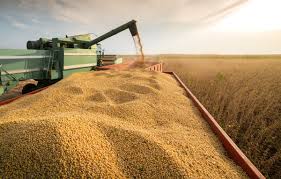
Brazil has updated its latest crop production outlook, with the country’s national supply agency CONAB announcing modest revisions to soybean and corn estimates. The updated projections indicate that soybean output is expected to reach record volume levels, while corn production figures have been slightly adjusted.
According to CONAB’s revised assessment, favorable weather conditions in key producing regions and steady acreage expansion have supported higher soybean productivity. Improved crop management practices, adoption of high-yielding varieties, and timely rainfall during critical growth stages have further strengthened output prospects. As a result, Brazil remains firmly positioned as one of the world’s leading soybean producers and exporters.
In contrast, corn production estimates were revised marginally, reflecting localized weather variations and adjustments in planted area data. While overall production remains strong, certain regions experienced climatic fluctuations that influenced yield expectations. Analysts note that Brazil’s corn crop continues to play a vital role in global feed grain markets, particularly in supporting livestock and poultry sectors worldwide.
Market participants are closely monitoring Brazil’s production data, as changes in output forecasts can influence global commodity prices, export volumes, and international trade flows. Strong soybean production may bolster export shipments to major buyers, while even minor revisions in corn supply can affect global grain balance sheets.
Agricultural economists highlight that Brazil’s performance in soybeans and corn has significant implications for global food security and commodity markets. With both crops forming a backbone of the country’s agribusiness sector, updated forecasts from CONAB serve as key indicators for traders, policymakers, and agribusiness stakeholders worldwide.
The latest revisions underscore Brazil’s continued dominance in global oilseed and grain markets, even as weather variability and market dynamics remain critical factors shaping production outcomes.


 By
By











