

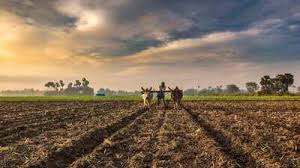
In a significant move to strengthen rural infrastructure and enhance farm productivity, the Government of Tamil Nadu has rolled out agriculture projects worth ₹53 crore aimed at empowering small and marginal farmers. The initiatives were inaugurated by Chief Minister M. K. Stalin, marking a major step toward improving farm-level support systems across the state.
The newly launched projects focus on establishing integrated agricultural extension centres, modern seed banks, cold storage facilities, and the distribution of farm machinery. These measures are designed to improve access to quality inputs, post-harvest infrastructure, and mechanization support, especially for smallholders who often face resource constraints.
The integrated extension centres will act as one-stop hubs for farmers, providing technical guidance, soil testing services, crop advisory support, and awareness about government schemes. By strengthening the extension network, the state government aims to bridge the knowledge gap between research institutions and farmers, ensuring the timely dissemination of modern agricultural practices.
The establishment of seed banks is expected to enhance seed security and ensure the availability of certified, high-yielding varieties at the local level. Reliable access to quality seeds remains a critical factor in boosting crop productivity and resilience against climate variability.
Cold storage units included in the package will address post-harvest losses, particularly for perishable commodities such as fruits and vegetables. With improved storage infrastructure, farmers can avoid distress sales, stabilize prices, and improve their income realization by selling produce at more favorable market conditions.
A significant component of the investment also includes the distribution of agricultural machinery to support farm mechanization. The machinery will be made available either directly to farmer groups or through rental models, enabling small and marginal farmers to access modern equipment at affordable rates. This approach reduces labor dependency, enhances operational efficiency, and lowers overall cultivation costs.
The state government has emphasized that the projects align with its broader vision of sustainable agricultural growth, improved farmer welfare, and enhanced rural livelihoods. By combining infrastructure development with technology-driven services, the initiative is expected to strengthen the agricultural value chain from production to post-harvest management.
With this ₹53 crore infrastructure push, Tamil Nadu continues to position itself as a progressive state in agricultural modernization, focusing on inclusive growth and long-term resilience for its farming community.


 By
By











