

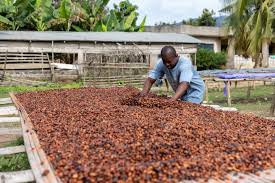
The global cocoa sector is undergoing significant structural reforms as major producing countries seek to reshape traditional trading systems and strengthen the position of farmers in the supply chain. Governments and industry stakeholders are increasingly pushing for direct trade arrangements between cocoa-producing nations and international chocolate manufacturers, aiming to create a more transparent and equitable market structure.
Leading cocoa producers such as Ghana and Côte d’Ivoire—which together account for a large share of the world’s cocoa production—have been advocating for reforms that allow producing countries to capture greater value from the global chocolate industry. Historically, cocoa beans have been exported primarily as raw commodities, with most processing and value addition taking place in developed countries.
Under the proposed reforms, producing countries are encouraging stronger partnerships with major chocolate manufacturers to facilitate more direct procurement systems. This approach is expected to reduce the number of intermediaries involved in the supply chain and improve price transparency for cocoa farmers.
One of the main objectives of the reforms is to increase the income of cocoa farmers, many of whom face persistent challenges such as price volatility, limited bargaining power, and rising production costs. By improving trading mechanisms and ensuring fairer pricing structures, governments hope to create a more sustainable livelihood for millions of smallholder farmers who depend on cocoa cultivation.
Another key focus of the reforms is the expansion of domestic processing capacity. Producing countries are investing in local cocoa grinding and processing facilities so that a larger portion of cocoa can be processed domestically before export. This strategy is expected to generate additional employment, stimulate rural economies, and help producing nations capture more value from the global cocoa industry.
Supply-chain transparency is also a major component of the ongoing reforms. Authorities and industry groups are working to improve traceability systems to ensure that cocoa production meets international sustainability standards. These initiatives aim to address concerns related to environmental sustainability, labor practices, and deforestation within the cocoa supply chain.
Market analysts believe that the shift toward direct trade and local processing could gradually transform the structure of the global cocoa industry. While the transition may take time, stronger collaboration between producing countries, chocolate manufacturers, and international organizations is expected to create a more balanced and resilient cocoa market.
As the global demand for chocolate continues to grow, these reforms could play a critical role in ensuring that cocoa farmers receive a fair share of the value generated across the supply chain while supporting long-term sustainability in cocoa-producing regions.


 By
By











