

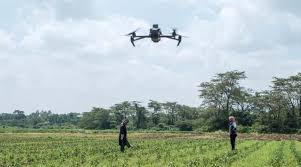
A new global industry analysis outlining agriculture trends for 2026 has identified artificial intelligence (AI), bioengineering, robotics, carbon farming, indoor farming, and predictive agriculture as the leading drivers shaping the future of food production. The report underscores that rapid technological acceleration, combined with climate and labor pressures, is pushing the sector toward high-efficiency, data-driven production models.
AI and automation are projected to be the most transformative forces, enabling precise monitoring, autonomous equipment operation, and real-time decision-making across farms. Technologies such as AI-powered scouting, robotic harvesters, and machine-learning-based crop modeling are expected to become mainstream, improving productivity while reducing resource use.
The report highlights bioengineering—including advanced seed genetics, molecular breeding, and gene-editing tools—as pivotal for developing climate-resilient and high-performance crop varieties. These innovations aim to enhance yield stability amid volatile weather conditions and pest pressures.
Carbon farming is emerging as a strategic opportunity for farmers and agribusinesses. The analysis notes increasing adoption of soil carbon sequestration practices, supported by expanding carbon-credit markets and corporate net-zero commitments. These trends are expected to integrate climate mitigation directly into farm business models.
Rapid growth is also anticipated in indoor and vertical farming, driven by urbanization, water scarcity, and demand for pesticide-free produce. Advances in controlled-environment agriculture, LED lighting efficiency, and hydroponic systems are making year-round food production more viable in compact spaces.
Predictive agriculture, powered by satellite imaging, big data analytics, and climate forecasting tools, is enabling farmers to anticipate risks and optimize inputs with unprecedented accuracy.
Overall, the report concludes that the convergence of digital technologies, biological innovation, and climate-focused practices will define agricultural growth trajectories through 2026. Stakeholders across the value chain are expected to increase investment in smart, resilient, and low-emission farming systems.


 By
By











