

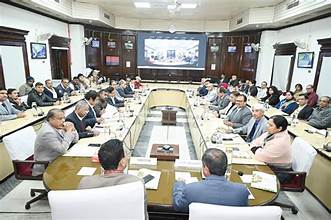
The ICAR–Indian Agricultural Research Institute (ICAR–IARI), New Delhi, convened an important meeting of its Senior Officers’ Committee (SOC) on 2 April 2026. The meeting was chaired by Dr. Cherekummalli Srinivasa Rao, Director of ICAR–IARI, and brought together senior officials, scientific leaders, and heads of key administrative units to assess institutional progress and outline strategic priorities for the coming months.
The SOC meeting is one of the institute’s most significant internal governance platforms, designed to review administrative functioning, monitor research progress, and align institutional actions with national agricultural priorities. The 2026 meeting focused on strengthening IARI’s operational efficiency, enhancing scientific productivity, and accelerating outreach activities for farmers.
Comprehensive Review of Ongoing Research and Institutional Activities
The meeting opened with a detailed review of the status of ongoing research projects across various divisions. Department heads presented updates on experiments, key achievements, collaborative initiatives, and projected milestones. Special attention was given to projects linked to climate-resilient agriculture, crop improvement, natural resource management, and digital agriculture.
Director Dr. Srinivasa Rao emphasized the need to maintain high-quality scientific outcomes and ensure that research programmes remain closely aligned with national agricultural missions. He highlighted the importance of strengthening inter-disciplinary collaboration and accelerating technology development pipelines.
Discussion on New Initiatives: Climate-Smart, Digital, and Precision Agriculture
A major focus area of the meeting was the institute’s expanding work in climate-smart agriculture, digital agriculture, and precision farming. Senior scientists presented proposals for new initiatives aimed at developing climate-resilient crop varieties, advanced phenotyping tools, and digital advisory systems for farmers.
The committee discussed strategies to integrate artificial intelligence, drone-based monitoring, sensor technologies, and big-data analytics into field-level research and extension activities. Members agreed that such technologies would play a critical role in enhancing farm productivity, reducing input inefficiencies, and strengthening India’s capacity to respond to climate variability.
Strengthening Academic and Research Environment
The SOC also deliberated on measures to improve the academic and research environment for students, research scholars, and early-career scientists. Discussions included strengthening laboratory facilities, upgrading hostels and academic infrastructure, ensuring timely procurement of scientific equipment, and improving administrative support mechanisms.
The Director stressed the need to create a nurturing ecosystem that encourages innovation, high-quality publications, and global scientific engagement. He also underscored the importance of promoting capacity-building programmes, international collaborations, and professional training for faculty members.
Farmer-Centric Technology Dissemination
Another key agenda point was the strategic expansion of farmer-oriented technologies developed by IARI. Committee members reviewed the performance of ongoing extension programmes, KVK partnerships, model village initiatives, and demonstrations conducted across various states.
The institute aims to ensure that climate-smart varieties, resource-efficient technologies, and digital advisory tools reach farmers more rapidly. Members discussed mechanisms to strengthen linkages with state agricultural departments, agri-startups, and private sector partners to scale up adoption.
Improving Administrative Efficiency
Administrative streamlining was an important component of the meeting. The SOC reviewed current procedures and identified ways to make them faster, more transparent, and more efficient. Topics discussed included digitization of workflows, financial management reforms, human resource planning, and improving inter-departmental coordination.
The Director reiterated that strong administrative systems are essential for supporting scientific excellence and ensuring timely implementation of projects. He encouraged all departments to adopt modern management practices and improve responsiveness.
A Strategic Meeting Aligned with ICAR Guidelines
The SOC meeting, held in line with the broader guidelines of the Indian Council of Agricultural Research (ICAR), played an essential role in clarifying institutional priorities for the upcoming months. By reviewing progress, addressing challenges, and planning actionable strategies, the meeting strengthened IARI’s commitment to advancing agricultural research, innovation, and farmer welfare.
Senior officers, division heads, and scientists representing multiple research units across the institute participated actively in the discussions.


 By
By











