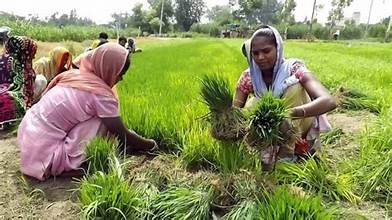
India’s agricultural landscape is witnessing a notable shift in cropping patterns as the area under summer rice cultivation has declined significantly in 2026. According to the latest estimates, rice acreage has fallen by around 2.47 lakh hectares compared to the previous year, signaling a change in farmer preferences driven by economic, climatic, and resource-related factors. This development is being closely monitored by policymakers and agricultural experts, given the importance of rice as a staple crop in the country.
One of the primary reasons behind the decline is the increasing cost of cultivation associated with rice farming. The crop requires substantial water, fertilizers, and labor inputs, making it relatively expensive compared to other alternatives. In many regions, erratic weather patterns and concerns over water availability have further discouraged farmers from continuing with traditional rice cultivation, particularly during the summer season when irrigation demand is high.
As a result, a growing number of farmers are opting to shift toward crops such as pulses, maize, and oilseeds. These crops are generally less water-intensive and offer better adaptability to changing climatic conditions. Pulses, in particular, are gaining traction due to their lower input costs and the added benefit of improving soil fertility through nitrogen fixation. Similarly, maize and oilseeds are increasingly seen as viable options due to their rising market demand and relatively stable returns.
This transition reflects a broader trend toward crop diversification in Indian agriculture. Farmers are becoming more responsive to market signals, government incentives, and environmental challenges, choosing crops that offer better profitability and sustainability. Government initiatives promoting pulses and oilseeds production, along with minimum support prices (MSP) and procurement support, have also played a role in influencing these decisions.
However, the decline in rice acreage could have implications for overall production if the trend continues. While current buffer stocks and production levels remain stable, a sustained reduction in cultivated area may eventually impact supply, especially if accompanied by adverse weather conditions. This could have downstream effects on prices and food security, given the central role of rice in India’s public distribution system and consumption patterns.
Experts suggest that this shift should not necessarily be viewed as negative, but rather as an adaptive response to evolving agricultural realities. Encouraging efficient water use, promoting climate-resilient crops, and ensuring market support for alternative crops will be key to maintaining balance in the sector.
As India continues to navigate the challenges of climate change, resource constraints, and market dynamics, the reduction in summer rice area highlights the need for a more diversified and sustainable approach to farming—one that secures farmer incomes while safeguarding the country’s food systems for the future.


 By
By