

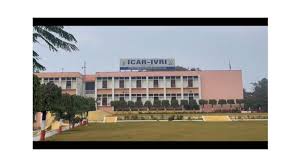
India’s premier agricultural research institute, ICAR-Indian Agricultural Research Institute, has earned significant global recognition for its contributions to advancing sustainable agriculture and food security. The development marks a major milestone not only for the institute but also for India’s growing influence in global agricultural research and innovation.
Popularly known as the “Pusa Institute,” ICAR-IARI has long been at the forefront of developing high-yielding and climate-resilient crop varieties. Its pioneering work in wheat and rice breeding has played a crucial role in strengthening India’s food production systems over the decades. Recent innovations in precision farming, biotechnology, and climate-smart agriculture have further elevated its global standing.
The recognition comes amid increasing international focus on sustainable food systems and climate adaptation. ICAR-IARI’s research on drought-tolerant crops, efficient nutrient management, and digital agriculture solutions has attracted attention from global institutions and policymakers. These efforts are aligned with broader goals of improving productivity while minimizing environmental impact.
Operating under the umbrella of the Indian Council of Agricultural Research, ICAR-IARI has also strengthened its global collaborations. The institute has been actively partnering with international research centers, universities, and development organizations to address shared challenges such as climate change, soil degradation, and food insecurity.
One of the key factors behind this recognition is the institute’s focus on translating research into practical solutions for farmers. Through extension programs, training initiatives, and technology dissemination, ICAR-IARI ensures that scientific advancements reach the grassroots level. This farmer-centric approach has made its innovations widely adoptable and impactful.
Experts note that ICAR-IARI’s achievements reflect India’s broader progress in agricultural science. The country is increasingly emerging as a hub for cost-effective and scalable farming technologies, particularly suited for smallholder farmers in developing regions.
Looking ahead, ICAR-IARI is expected to play a pivotal role in shaping the future of agriculture, not just in India but globally. With continued investment in research and innovation, the institute is well-positioned to contribute to sustainable intensification, climate resilience, and global food security.
In conclusion, the global recognition of ICAR-IARI underscores the importance of scientific research in transforming agriculture. It highlights how innovation, when combined with strong institutional support and farmer engagement, can create lasting impact on food systems worldwide.


 By
By











