

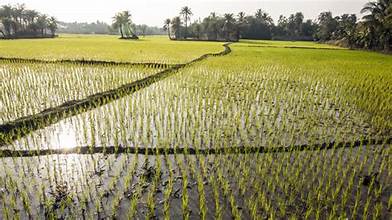
The global rice market is facing mounting uncertainty as a combination of geopolitical tensions and adverse climate conditions threatens production across key growing regions. Experts warn that rising input costs, fertilizer shortages, and the likelihood of an El Niño weather pattern could significantly tighten supply and push prices higher in the coming months.
According to recent reports, the ongoing Iran conflict has disrupted the flow of critical agricultural inputs such as fuel and fertilizers, particularly through the strategically vital Strait of Hormuz. This disruption has sharply increased production costs for farmers in major rice-producing countries, including Thailand, Vietnam, Indonesia, and the Philippines. As a result, many growers are reducing fertilizer usage and cutting back on planting acreage to manage expenses.
The situation is further complicated by the expected arrival of El Niño, which typically brings hotter and drier weather conditions across Asia. Such climatic shifts are likely to reduce crop yields, especially for water-intensive crops like rice. Analysts believe that even a moderate drop in production could have widespread consequences, given rice’s central role in global food security.
Although the United Nations’ Food and Agriculture Organization (FAO) had earlier projected a record global rice output for the 2025–26 season, the current developments are casting doubt on those forecasts. Farmers in several regions have already begun scaling back input use due to soaring costs, which could translate into lower yields later in the year.
The potential supply squeeze is raising concerns about food inflation, particularly in Asia and Africa, where rice is a staple food for billions. Even minor disruptions in supply can lead to sharp price increases, putting additional pressure on household budgets and increasing the risk of food insecurity.
Market analysts note that while global rice inventories remain relatively stable for now—supported in part by large stockpiles in countries like India—the situation could deteriorate quickly if geopolitical tensions persist or weather conditions worsen.
In the near term, the global rice market is likely to remain volatile, with prices sensitive to both climate developments and geopolitical events. Policymakers and agricultural stakeholders are closely monitoring the situation, as the combined impact of war and weather could reshape global food supply dynamics in 2026.


 By
By











