

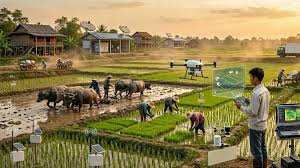
Artificial intelligence (AI) is rapidly transforming agriculture across Southeast Asia, where a new generation of innovators is developing smart technologies to help farmers increase productivity, reduce costs, and adapt to changing climate conditions. From AI-powered crop monitoring systems to predictive analytics and automated farm management platforms, digital solutions are becoming an increasingly important part of the region’s agricultural landscape.
As agriculture faces mounting challenges such as labor shortages, unpredictable weather, pest outbreaks, and rising production costs, startups and research institutions are turning to AI to provide practical and scalable solutions. These technologies are enabling farmers to make data-driven decisions, optimize resource use, and improve the efficiency of day-to-day operations.
One of the most promising applications of AI is precision crop management. Using satellite imagery, drones, sensors, and machine learning algorithms, farmers can monitor crop health in real time and identify signs of nutrient deficiencies, diseases, or water stress before they become widespread. Early detection allows producers to take targeted action, reducing crop losses and minimizing unnecessary use of fertilizers and pesticides.
AI is also helping address labor shortages that have become a growing concern in several Southeast Asian countries. Automated systems can assist with tasks such as field monitoring, irrigation scheduling, harvesting support, and machinery operation, reducing dependence on manual labor while improving productivity. For many farms, these technologies offer a way to maintain output despite workforce constraints.
Climate resilience is another area where AI is making a significant impact. Advanced forecasting tools analyze weather patterns, soil conditions, and historical data to provide farmers with timely recommendations on planting dates, irrigation needs, and pest management strategies. By anticipating climate-related risks, producers can better protect their crops and reduce the likelihood of severe losses caused by droughts, floods, or extreme temperatures.
Young entrepreneurs across the region are playing a key role in driving this technological transformation. Many startups are creating mobile applications that provide smallholder farmers with personalized advisory services, market information, and real-time alerts. These user-friendly platforms make advanced agricultural knowledge more accessible, even in remote rural communities where extension services may be limited.
Governments and agricultural organizations are also supporting digital innovation through research partnerships, pilot projects, and investment programs aimed at accelerating the adoption of smart farming technologies. Collaboration between public institutions, universities, and private companies is helping expand access to AI solutions while encouraging innovation tailored to local farming conditions.
Despite the growing momentum, challenges remain. Limited internet connectivity, high technology costs, and varying levels of digital literacy can slow adoption among small-scale farmers. Experts emphasize the importance of affordable solutions, training programs, and supportive policies to ensure that the benefits of AI reach all segments of the agricultural sector.
The increasing use of artificial intelligence is also contributing to more sustainable farming practices. By enabling precise application of water, fertilizers, and crop protection products, AI helps reduce waste, conserve natural resources, and lower the environmental footprint of agriculture. These efficiencies not only benefit farmers economically but also support broader sustainability goals.
As Southeast Asia continues to modernize its agricultural sector, AI is expected to play an even greater role in shaping the future of food production. With continued innovation, investment, and collaboration, intelligent farming technologies have the potential to strengthen food security, improve rural livelihoods, and build more resilient agricultural systems capable of meeting the challenges of a changing world.


 By
By











