

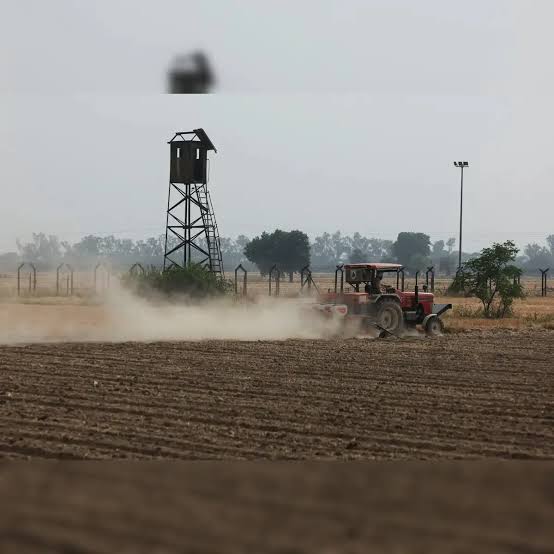
Climate change is emerging as one of the greatest threats to global agriculture, with recent scientific analyses showing that rising temperatures, erratic rainfall, prolonged droughts, floods, and other extreme weather events are already causing billions of dollars in agricultural losses each year. Researchers warn that without stronger climate adaptation measures, the impact on global crop production, food security, and rural livelihoods is expected to intensify significantly in the coming decades.
Agriculture is highly dependent on stable weather conditions, making it particularly vulnerable to climate variability. Across many parts of the world, farmers are experiencing unpredictable growing seasons, delayed monsoons, heatwaves, water shortages, and more frequent storms. These changing weather patterns are affecting crop yields, reducing farm productivity, and increasing the cost of food production.
Scientists note that higher temperatures can shorten crop growth cycles, reduce grain quality, and increase water demand for irrigation. Heat stress also affects livestock health and productivity, while changing climatic conditions create favourable environments for the spread of pests, weeds, and crop diseases. Together, these factors pose serious challenges to ensuring global food and nutritional security.
Extreme weather events such as floods, cyclones, hurricanes, and prolonged droughts are becoming more frequent and severe, causing widespread damage to crops, farmland, irrigation systems, and rural infrastructure. Such disasters not only reduce agricultural output but also disrupt food supply chains, increase market volatility, and threaten the livelihoods of millions of farming families.
Agricultural economists warn that climate-related production losses could lead to higher food prices and increased pressure on global food systems. Developing countries, where agriculture is often heavily dependent on rainfall and smallholder farming, are expected to face the greatest challenges due to limited financial resources and lower adaptive capacity.
Experts emphasize that investing in climate-resilient agriculture has become essential for safeguarding future food production. This includes the development of drought-, flood-, and heat-tolerant crop varieties, efficient irrigation technologies, improved water conservation practices, precision farming, and sustainable soil management. These innovations can help farmers maintain productivity while reducing the environmental footprint of agriculture.
Climate-smart agriculture is also gaining global attention as a practical approach to balancing productivity, adaptation, and environmental sustainability. Practices such as crop diversification, agroforestry, conservation agriculture, integrated nutrient management, and digital weather advisory services are helping farmers build resilience against climate-related risks while improving resource efficiency.
Researchers also stress the importance of strengthening early warning systems, expanding agricultural insurance programmes, and improving access to climate information. Accurate weather forecasts and timely advisories enable farmers to make informed decisions regarding sowing, irrigation, fertilizer application, and pest management, reducing the impact of extreme weather events.
International organizations are urging governments, research institutions, private companies, and development agencies to increase investments in agricultural research, climate adaptation, and sustainable farming technologies. Greater global cooperation will be essential to share scientific knowledge, climate-resilient innovations, and financial resources needed to support vulnerable farming communities.
As the effects of climate change continue to intensify, scientists agree that adaptation can no longer be viewed as a future challenge but as an immediate priority. Building resilient agricultural systems through innovation, sustainable resource management, and supportive policies will be critical to ensuring stable food production, protecting farmer livelihoods, and strengthening global food security in the decades ahead.


 By
By











