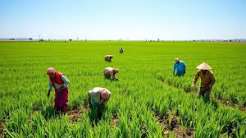
India’s summer crop planting has made a remarkable recovery following a strong revival in monsoon rainfall, easing earlier concerns over delayed sowing and raising hopes for a robust agricultural season. The improved rainfall has accelerated field operations across major farming states, with total Kharif crop sowing reaching 78.7 million hectares, significantly narrowing the deficit recorded at the beginning of the season.
The timely return of the southwest monsoon has brought much-needed relief to millions of farmers who were struggling with dry conditions during the initial weeks of the sowing period. Adequate soil moisture has enabled farmers to expand cultivation of key food and cash crops, strengthening expectations for higher agricultural output in the coming months.
Among the major crops, rice has witnessed a notable improvement in planting, supported by widespread rainfall in eastern, central, and northern India. As rice remains the country’s most important staple food and a major export commodity, higher acreage is expected to contribute to both domestic food security and stable global rice supplies.
The revival has also boosted the sowing of cotton, soybean, maize, and sugarcane, with farmers taking advantage of favorable weather conditions to complete planting operations. Soybean-growing regions in Madhya Pradesh and Maharashtra have reported faster sowing progress, while maize cultivation has expanded in several states due to improved moisture availability. Cotton-producing belts in Gujarat, Maharashtra, and Telangana have also recorded encouraging planting activity.
Agriculture experts believe the improved sowing pace is likely to translate into better crop yields if the monsoon continues to remain normal during the remaining growing season. Healthy crop development would not only improve farm incomes but also help stabilize food prices and reduce inflationary pressures.
India is one of the world’s largest producers of rice, pulses, cotton, sugar, and several oilseeds. Therefore, a strong Kharif season carries significant implications for global agricultural markets. Higher production could support international grain supplies at a time when several regions continue to face weather-related production risks and geopolitical uncertainties affecting food trade.
The recovery in sowing has also boosted confidence among commodity traders and agricultural economists, who had earlier expressed concerns about the delayed onset of the monsoon. With rainfall now improving across most agricultural regions, expectations for better harvests have strengthened, potentially easing pressure on global grain and edible oil markets.
Government agencies continue to monitor rainfall patterns, reservoir levels, and crop progress to ensure timely support for farmers. Adequate availability of seeds, fertilizers, and other agricultural inputs has further contributed to the improved pace of sowing.
While weather conditions during the critical crop growth stages will remain crucial, the latest planting figures indicate that India’s agricultural sector has regained momentum after a slow start. If favorable monsoon conditions persist through the season, the country could be on track for another strong Kharif harvest, reinforcing its position as a key contributor to global food security and agricultural trade.
The positive turnaround in Kharif sowing reflects the resilience of Indian agriculture and highlights the critical role of a healthy monsoon in sustaining food production, rural livelihoods, and the broader economy.


 By
By