

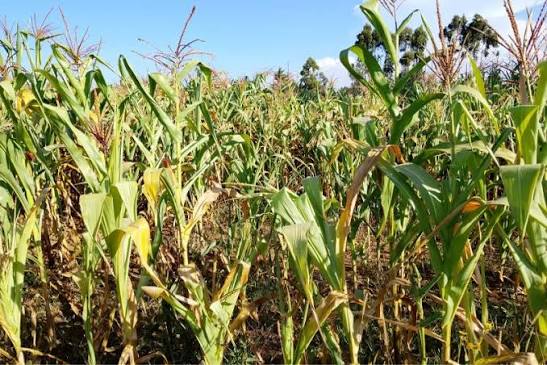
Farmers in Kenya are being encouraged to shift toward early-maturing crop varieties as prolonged drought continues to threaten agricultural production and raise concerns over food security ahead of the country’s short-rains season.
The call for farmers to adopt faster-growing and climate-resilient crops comes amid growing concerns that inadequate rainfall could result in below-normal harvests in several drought-affected areas. With agriculture heavily dependent on seasonal rainfall, unpredictable weather conditions are making it increasingly difficult for farmers to plan planting and harvesting activities.
Early-Maturing Crops Offer a Practical Solution
Early-maturing varieties can help farmers reduce their exposure to prolonged dry conditions by allowing crops to complete their growth cycle within a shorter period.
Such varieties can be particularly valuable in areas where rainfall seasons are becoming shorter or less predictable. By harvesting crops earlier, farmers may be able to avoid some of the most damaging stages of drought and reduce the risk of complete crop failure.
Crops that mature quickly can also provide farmers with an opportunity to make better use of limited soil moisture following the arrival of seasonal rains. However, the availability of quality seed and appropriate technical guidance remains essential to ensure successful adoption.
Drought Raises Food Security Concerns
Prolonged drought can have a significant impact on both household food supplies and farmers’ incomes. When crops fail or yields decline, rural households may face higher food expenses while simultaneously losing income from agricultural production.
The situation can also affect local markets. Reduced harvests may decrease the availability of staple crops and contribute to higher food prices, particularly when several production areas experience poor rainfall at the same time.
For vulnerable farming communities, repeated droughts can also reduce livestock feed availability, increase water shortages and weaken household resilience.
Climate-Smart Agriculture Gaining Importance
Kenya’s experience highlights the growing importance of climate-smart agriculture across drought-prone regions of Africa and other parts of the world.
In addition to early-maturing varieties, farmers can adopt practices such as drought-tolerant seeds, water harvesting, conservation agriculture, mulching, improved soil-moisture management and crop diversification.
These approaches can help farmers make better use of limited natural resources while reducing their dependence on predictable rainfall patterns.
Agricultural extension services and local institutions also have an important role to play by providing farmers with timely weather information, recommending suitable crop varieties and helping communities prepare for changing climatic conditions.
Need for Timely Support
For farmers preparing for the short-rains season, access to quality seed and reliable climate information will be critical. Early decisions on crop selection and planting dates can make a significant difference when rainfall windows are limited.
Experts increasingly emphasize that climate adaptation should not be viewed only as a response to individual drought events. Instead, farmers need long-term strategies that improve the resilience of their entire farming systems.
Kenya’s push toward early-maturing crops reflects a broader shift in African agriculture as farmers adapt to increasingly unpredictable weather.
With drought continuing to threaten agricultural production, climate-resilient crop varieties and improved farming practices could play an important role in protecting harvests, strengthening rural livelihoods and supporting food security.


 By
By











