

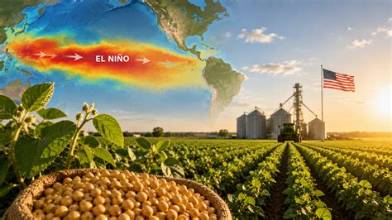
A potentially powerful El Niño event is raising fresh concerns over global agriculture, with extreme weather threatening crop production in several major farming regions. However, the global food system may be better positioned to absorb the shock than in previous years, thanks to relatively strong grain inventories, improved crop varieties, irrigation expansion and advances in precision agriculture.
El Niño, a periodic climate phenomenon driven by unusually warm ocean temperatures in the central and eastern Pacific, can disrupt rainfall and temperature patterns across the world. A strong event can bring drought to some agricultural regions while triggering excessive rainfall and flooding in others, creating significant risks for cereals, oilseeds and other major crops.
Global Grain Stocks Provide a Safety Net
One of the biggest factors reducing the immediate threat to global food supplies is the availability of grain stocks. Near-record inventories of major grains provide governments, traders and food processors with a cushion against temporary production losses.
Large reserves can help stabilize domestic supplies and reduce the risk of sudden shortages when weather-related crop damage occurs. They can also provide policymakers with greater flexibility to manage market volatility and protect consumers from sharp increases in food prices.
However, strong stocks do not eliminate the risk. A prolonged or exceptionally severe El Niño could affect production across multiple agricultural regions simultaneously, putting pressure on inventories and global trade flows.
Improved Crop Varieties Strengthen Farmer Resilience
Agricultural research has also improved the ability of farmers to cope with unpredictable weather. Modern crop varieties increasingly offer greater tolerance to drought, heat, flooding and diseases.
Breeding programmes are focusing on varieties that can maintain productivity under water stress and high temperatures. Faster-maturing crops can also help farmers adjust planting and harvesting schedules when seasonal weather patterns become less predictable.
These developments could prove particularly important in regions where farmers have limited access to irrigation or other forms of climate protection.
Irrigation and Precision Farming Reduce Weather Risks
Expansion of irrigation infrastructure is another important line of defence. Reliable access to water can reduce the impact of rainfall shortages during critical crop-growth stages, particularly for cereals, vegetables and high-value crops.
At the same time, precision farming technologies are helping farmers use water, fertilizers and crop-protection products more efficiently. Soil moisture sensors, satellite imagery, weather forecasting tools, drones and automated irrigation systems allow farmers to respond more precisely to changing field conditions.
Digital advisory platforms are further strengthening this response by providing farmers with timely information on weather, sowing windows, irrigation requirements, pest outbreaks and crop management.
Climate Risk Could Still Put Food Markets Under Pressure
Despite these safeguards, the agricultural sector remains vulnerable to extreme weather. A strong El Niño can affect several major producing regions at the same time, potentially reducing yields and increasing volatility in commodity markets.
The impact will also vary significantly by crop and geography. Some regions may experience improved growing conditions because of increased rainfall, while others could face severe drought or heat stress.
For farmers, early preparation will therefore be critical. Adjusting sowing dates, selecting climate-resilient varieties, improving soil moisture management and maintaining efficient irrigation systems could help reduce potential losses.
Technology and Stocks Offer a Buffer, Not a Guarantee
The combination of healthy grain inventories, improved genetics, irrigation, precision agriculture and digital advisory services has made the global food system more resilient to climate shocks. These tools can help farmers and policymakers respond faster when extreme weather disrupts production.
Nevertheless, the possibility of a strong El Niño highlights the importance of continued investment in climate-resilient agriculture. Maintaining adequate food reserves, strengthening agricultural infrastructure and expanding access to climate information will remain essential to protecting global food security.
As the world prepares for another potentially disruptive climate cycle, the message for agriculture is clear: strong grain stocks can provide a valuable safety net, but technology, preparedness and climate-resilient farming will determine how effectively the sector withstands the next major weather shock.


 By
By











