

Malaysia is placing smart farming, automation and agricultural technology at the heart of MAHA 2026, as the country accelerates efforts to modernize its agricultural sector and strengthen national food security. The Malaysia Agriculture, Horticulture and Agrotourism Exhibition is scheduled to take place from August 28 to September 6, 2026, at MAEPS Serdang, Selangor. Official MAHA 2026 website
The exhibition is expected to showcase how digital technologies, automation and advanced farming systems can improve productivity, reduce dependence on manual labour and make agriculture more efficient. Smart farming will be a major feature of the event, reflecting Malaysia’s broader push toward a more technology-driven agri-food sector.
Smart Farming Takes Center Stage
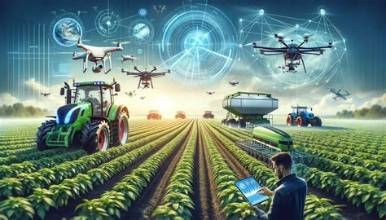
MAHA 2026 will feature a dedicated Smart Farming Zone, where visitors can see technologies designed to modernize farm operations. The official programme includes live demonstrations of agricultural drones, autonomous tractors and vertical farming systems.
These technologies can help farmers perform tasks more precisely while reducing labour requirements. Drones, for example, can support crop monitoring and targeted application of inputs, while autonomous machinery can perform field operations with greater consistency.
The growing focus on automation is particularly relevant as agriculture faces labour shortages and rising production costs. Malaysia has been working to increase mechanisation and automation as part of its strategy to improve agricultural productivity and competitiveness.
Technology Linked to Food Security
The technology push at MAHA 2026 is closely connected with Malaysia’s food-security objectives. The exhibition’s theme, “Value Creation for Food Security,” reflects the country’s effort to develop a more productive and resilient agricultural sector.
MAHA 2026 is expected to attract more than 4 million visitors and around 2,000 exhibitors, creating a major platform for farmers, technology companies, researchers, investors and agricultural businesses to exchange ideas and explore new opportunities.
The event will cover a wide range of agricultural activities, including crops, horticulture, fisheries, livestock and agrotourism. Technology will connect many of these sectors through automation, digital monitoring and smart production systems.
AI and Automation Gain Importance
Malaysia is also increasingly recognising artificial intelligence, engineering and automation as important tools for the future of its agricultural and commodity industries. The country’s agricultural engineering community has highlighted digitalisation, AI and automation as critical to improving competitiveness and food security.
AI-powered systems can help analyse farm data, monitor crops and livestock, predict potential problems and support better production decisions. When combined with sensors, robotics, satellite imagery and automated machinery, these technologies can create more connected and responsive farming systems.
Reducing Labour Dependence
Labour availability is one of the key challenges facing modern agriculture. Automation offers a potential solution by allowing machines and digital systems to perform repetitive and physically demanding tasks.
Autonomous tractors, robotic systems and automated irrigation can reduce the amount of manual intervention required while improving operational efficiency. For farmers, this could translate into lower labour dependence and more precise use of resources.
However, widespread adoption will depend on factors such as technology costs, connectivity, technical skills and access to financing. Ensuring that smaller farmers can also benefit from technological advances will be important for an inclusive agricultural transformation.
MAHA 2026 Signals a New Direction
The strong emphasis on smart farming and automation at MAHA 2026 demonstrates Malaysia’s determination to move beyond traditional agricultural practices and embrace Agriculture 4.0.
With live demonstrations, technology showcases and international participation, the exhibition is expected to provide a glimpse into how Malaysian agriculture could look in the coming years.
As climate change, labour shortages and food-security pressures continue to challenge farmers, technologies such as AI, robotics, automation, drones and precision farming could become increasingly important. MAHA 2026 is positioning these innovations not simply as futuristic concepts, but as practical tools for building a more productive, efficient and resilient agricultural sector.


 By
By











