

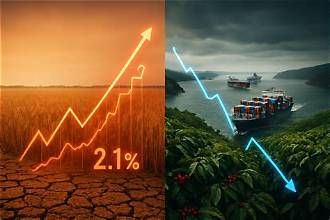
Global food commodity prices edged higher in July 2026 as weather-related concerns, geopolitical tensions and changing energy-market conditions pushed up prices for several major agricultural products. According to the Food and Agriculture Organization of the United Nations (FAO), the FAO Food Price Index averaged 131.1 points in July, increasing by 0.6% from June and standing 1.0% above its level a year earlier.
The increase highlights the continuing sensitivity of global food markets to climate and geopolitical developments. While overall food prices remain well below the record level reached in March 2022, disruptions to crop production, international trade and energy markets continue to create uncertainty for farmers, traders, food companies and consumers.
Among the major commodity groups, cereals recorded one of the strongest increases. The FAO Cereal Price Index rose 3.4% in July, with global wheat prices increasing 5.8%. FAO linked the rise partly to concerns about continued disruptions to Black Sea export flows and the impact of recent heatwaves on crop yields in several major producing countries.
Maize prices also increased, rising 3.6% from June. Hot and dry weather in parts of the United States added concerns about crop conditions, while firmer energy prices and geopolitical tensions provided additional support to maize markets. These developments demonstrate how weather and energy costs can influence agricultural commodity prices simultaneously.
Vegetable oils were another important contributor to the July increase. The FAO Vegetable Oil Price Index climbed 2.0%, reaching its highest level since June 2022. Palm oil prices strengthened amid firm demand from Indonesia’s biodiesel sector and higher crude oil prices, while soybean oil prices were supported by strong feedstock demand in the United States and stronger global import demand.
Sugar prices also moved higher. The FAO Sugar Price Index increased 5.6% in July from the previous month. Persistent hot and dry weather in the European Union and concerns over El Niño-related conditions in key Asian producing countries raised concerns about future production. Brazil’s ethanol market also influenced prices, as stronger ethanol demand could divert more sugarcane toward biofuel production rather than sugar.
However, not all food commodities became more expensive. The FAO Meat Price Index declined 2.8% in July, marking its first monthly decrease of 2026. Lower poultry prices in Brazil, abundant supplies in the European Union and subdued global demand contributed to the decline. The Dairy Price Index also fell 0.7%, mainly because of lower prices for butter and milk powders.
The contrasting movements across commodity groups show that global food markets remain highly dependent on individual supply and demand conditions. Strong production and ample supplies can limit price increases, while extreme weather or trade disruptions can quickly tighten availability.
For farmers, rising cereal, oil and sugar prices could provide better returns in some markets, but higher energy, fertilizer and transportation costs can reduce those gains. For consumers, sustained increases in staple commodities may eventually add pressure to food prices, particularly in countries heavily dependent on imports.
Looking ahead, weather conditions will remain a major factor for global food markets. Heatwaves, droughts and El Niño-related disruptions could affect crop yields in major producing regions. At the same time, geopolitical tensions and disruptions to important trade routes could influence export flows and transportation costs.
Overall, the July FAO Food Price Index provides a mixed picture: global food prices remain relatively stable compared with their 2022 peak, but climate risks, energy-market movements and geopolitical uncertainty continue to create pressure. The direction of prices in the coming months will depend heavily on harvest outcomes, weather developments and the stability of international food trade.


 By
By











