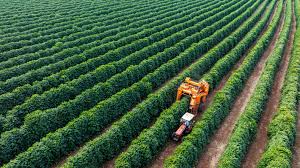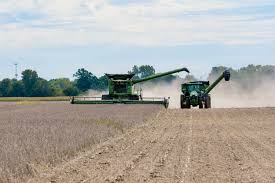
The global agricultural machinery sector is witnessing mixed market trends as recent industry data indicates a decline in tractor and combine sales in the United States. Analysts attribute the slowdown largely to tighter farm incomes and cautious spending behavior among producers, who are carefully managing investments amid uncertain agricultural market conditions.
According to industry observers, the drop in machinery purchases reflects the financial pressure faced by many farmers due to fluctuating commodity prices, rising input costs, and higher interest rates. These factors have prompted many producers to delay large equipment purchases and extend the usage period of their existing machinery.
Tractors and combines represent some of the largest capital investments for farmers, and purchasing decisions often depend heavily on farm profitability and crop price outlook. With many farmers experiencing tighter margins, equipment dealers have reported slower sales activity compared to previous years.
Despite the overall slowdown, the market for high-horsepower agricultural machinery remains relatively stable. Large-scale farming operations continue to invest in advanced equipment to improve efficiency and manage large acreages. Demand for high-capacity tractors and technologically advanced machines is being supported by the need for higher productivity and labor efficiency.
Manufacturers are also focusing on innovation to maintain demand in the sector. Modern agricultural equipment increasingly integrates precision agriculture technologies, including GPS-guided systems, automated controls, and data-driven farm management tools. These features allow farmers to optimize field operations, reduce input costs, and improve overall productivity.
Industry experts note that the agricultural machinery market tends to follow cyclical patterns linked to farm income and commodity price trends. When crop prices are strong and farm revenues increase, farmers are more likely to invest in new machinery. Conversely, periods of lower profitability often lead to reduced equipment purchases.
Although short-term sales trends remain uncertain, long-term demand for modern agricultural equipment is expected to remain strong as farms continue to adopt mechanization and precision technologies. As global agriculture evolves to meet rising food demand, efficient and technologically advanced machinery will continue to play a critical role in improving farm productivity and sustainability


 By
By