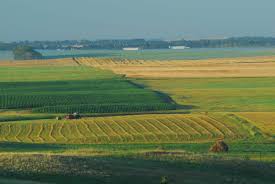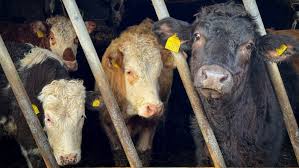
Australia’s agricultural industry has recorded its strongest productivity growth in two decades, reflecting improved farm efficiency, climate adaptation strategies, and sustained export performance. The surge positions the country as a potential global leader in the transition toward net-zero agriculture.
Recent data from the Australian Bureau of Agricultural and Resource Economics and Sciences indicates that broadacre and livestock farms have achieved significant gains in total factor productivity. Advances in precision farming, digital technologies, improved crop varieties, and better water management have contributed to long-term output growth despite climate variability.
Australian farmers have faced recurring droughts, floods, and extreme weather events over the past two decades. However, adaptive practices — including drought-resistant crop systems, rotational grazing, conservation tillage, and enhanced irrigation efficiency — have helped stabilize yields and protect soil health. These strategies have strengthened resilience across key commodities such as wheat, barley, beef, and wool.
The farm sector’s performance has also been supported by strong global demand, particularly from Asian markets. Australia remains a major exporter of grains and red meat, and productivity gains have improved its competitiveness in international trade.
Climate policy has played a parallel role in shaping the sector’s direction. Under national frameworks guided by the Australian Government, agriculture is being integrated into broader emissions reduction strategies. While farming accounts for a share of national greenhouse gas emissions, producers are increasingly adopting carbon farming initiatives, methane-reduction feed technologies, and regenerative land management practices.
Industry experts note that technological innovation will be critical in achieving long-term sustainability goals. Investments in soil carbon measurement, low-emission livestock systems, and renewable energy use on farms are accelerating. Many producers are also participating in carbon credit markets, creating new revenue streams while lowering environmental impact.
Despite the positive outlook, challenges remain. Input costs, labor shortages, and climate uncertainty continue to test farm profitability. Nevertheless, sustained productivity growth suggests the sector has built a strong foundation for future expansion.
With two decades of steady advancement and a growing emphasis on climate-smart agriculture, Australia’s farm sector is increasingly positioned as a model for balancing profitability with environmental responsibility in the global push toward net-zero food systems.


 By
By