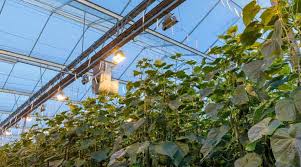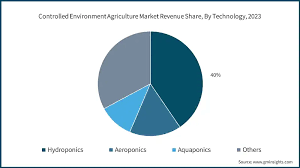
The controlled environment agriculture (CEA) sector is poised for substantial growth over the coming decade, driven by increasing adoption of indoor and protected farming systems worldwide. CEA practices—including vertical farming, hydroponics, aeroponics, and greenhouse cultivation—allow for precise control over temperature, light, humidity, and nutrient delivery, enabling consistent, high-quality crop production year-round.
Rising concerns over food security, climate change, and urban population growth are accelerating interest in CEA solutions. By enabling local food production close to urban centers, these systems reduce supply chain dependence, lower transportation costs, and limit post-harvest losses. Additionally, CEA minimizes water usage and land requirements compared to conventional agriculture, making it a sustainable alternative in resource-constrained regions.
Technological innovations, such as automated monitoring, AI-driven decision-making, and energy-efficient LED lighting, are enhancing the efficiency and scalability of CEA operations. These advancements are helping farmers increase yield per square meter while reducing labor and input costs.
Regions like North America, Europe, and parts of Asia-Pacific are emerging as key markets, supported by investments in smart farming infrastructure, supportive government policies, and growing consumer demand for fresh, locally grown produce. Analysts expect that expanding awareness of climate-resilient agriculture and continued innovation in controlled environment technologies will sustain robust market growth through 2035.
As global agriculture seeks solutions for sustainable production and urban food security, controlled environment agriculture is increasingly recognized as a critical component of the future food system.

 By
By