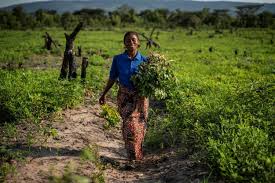
The United Nations Food and Agriculture Organization (FAO) has reported that global government spending on agriculture reached record levels in recent years, reflecting increased attention to food security, rural livelihoods, and sector development. However, the agency cautions that despite higher nominal spending, the relative investment compared to agriculture’s contribution to global GDP has declined, posing challenges to achieving the Sustainable Development Goals (SDGs).
According to FAO data, countries worldwide have boosted public expenditure on agricultural support programs, infrastructure, research, and development. This trend has been driven by efforts to strengthen food systems, enhance productivity, and build resilience against climate change, market shocks, and supply chain disruptions.
Despite these record investments, FAO notes that the growth of government spending has not kept pace with the rising economic and social demands of the agricultural sector. In many regions, the ratio of public spending to agriculture’s GDP contribution has fallen, indicating that resources may not be sufficient to fully address issues such as rural poverty, smallholder farmer support, and sustainable land management.
FAO emphasizes that achieving the SDGs—particularly Goal 2, which aims to end hunger and promote sustainable agriculture—requires more strategic and targeted investment. Experts argue that funding must focus not only on increasing output but also on improving inclusivity, environmental sustainability, and resilience in the face of climate change.
The report highlights the importance of complementary private-sector investment alongside public expenditure. Mobilizing additional financial resources, improving access to credit for smallholders, and fostering innovation in agriculture are seen as critical measures to accelerate progress toward food security and sustainable development.
FAO also calls for stronger policy frameworks, monitoring mechanisms, and efficient allocation of resources to ensure that investments translate into tangible outcomes for farmers and rural communities. Without such measures, the agency warns that current spending levels, although record-breaking in absolute terms, may fall short of the broader ambitions set under the SDGs.
As governments continue to prioritize agriculture in policy agendas, the FAO report underscores that maximizing the impact of investments—through both quantity and strategic targeting—will be key to achieving sustainable, inclusive, and resilient food systems worldwide.

 By
By