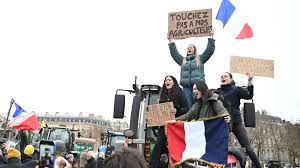
Large-scale farmer protests have erupted across France, with tractors rolling into Paris and major highways blocked, as agricultural producers voice strong opposition to the proposed EU–Mercosur free trade agreement and escalating input costs. The demonstrations underline deepening tensions between farming communities and policymakers over trade liberalisation, farm profitability, and the future of domestic agriculture.
Farmers from key agricultural regions converged on the French capital and other urban centres, using tractors and farm machinery to obstruct traffic on ring roads, motorways, and strategic supply routes. Protesters argue that the EU–Mercosur trade deal, once approved, would open European markets to increased imports of agricultural products—particularly beef, poultry, sugar, and grains—from South American countries with lower production costs and less stringent regulatory frameworks.
French farmers fear that an influx of cheaper imports from Mercosur nations such as Brazil and Argentina would severely undercut domestic producers, already struggling with narrow margins. They contend that European farmers are required to comply with strict environmental, animal welfare, and food safety regulations, which raise production costs but are not always equally enforced on imported products.
Alongside trade concerns, demonstrators highlighted the sharp rise in farming costs as a central grievance. Increases in fuel prices, fertilisers, animal feed, electricity, and labour expenses have placed significant financial pressure on farms, particularly small and medium-sized family operations. Farmers warn that without stronger price guarantees and policy support, many businesses could become economically unsustainable.
Farm unions and producer groups have called on the French government to take a firmer stance within the European Union, urging it to block or renegotiate the Mercosur agreement. They are also demanding stronger safeguards, fair pricing mechanisms, and compensation measures to protect EU farmers from market disruption.
The French government has acknowledged farmers’ concerns and reiterated its demand for robust environmental and social safeguards within any trade agreement. Officials have stated that France will not support deals that undermine domestic agriculture or contradict the EU’s climate and sustainability commitments. However, negotiations at the EU level remain ongoing, with divisions among member states over the economic and strategic value of the Mercosur pact.
The protests highlight a broader challenge facing European agriculture—balancing global trade ambitions with farm viability, food sovereignty, and environmental goals. As discussions over the EU–Mercosur agreement continue, farmer unrest in France signals that agricultural policy is likely to remain a politically sensitive issue across Europe in the months ahead.

 By
By