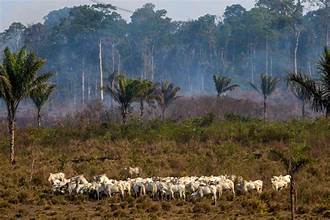
A major international analysis has revealed that beef production accounts for nearly 40% of all agriculture-related deforestation worldwide, highlighting the profound environmental costs associated with expanding livestock systems. The findings place renewed scrutiny on land-use practices, particularly in tropical regions where forests are being cleared at accelerating rates to accommodate cattle ranching and feed production.
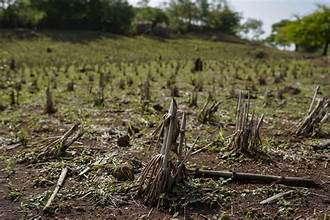
The study identifies Brazil as the leading contributor to deforestation driven by beef production. The Amazon rainforest and Cerrado savannas—two of the planet’s most biodiverse ecosystems—continue to face escalating pressure from cattle expansion, despite policy pledges and global commitments to curb forest loss. According to researchers, large tracts of forest are being converted into pastureland, undermining conservation efforts and releasing massive quantities of carbon stored in vegetation and soils.
While beef emerged as the most significant driver, the analysis shows that several other commodities also play substantial roles in global forest loss. Palm oil, soy, cocoa, coffee, and a range of staple crops contribute to deforestation across Asia, Latin America, and Africa. These crops are often linked to economic development and export-driven agriculture, yet their expansion frequently occurs at the expense of ecologically sensitive landscapes.
Soy production, in particular, is closely intertwined with the livestock sector, as vast quantities are used in animal feed for poultry, pork, and dairy systems worldwide. Palm oil expansion remains concentrated in Southeast Asia, where countries like Indonesia and Malaysia have seen years of steady forest clearing. Meanwhile, cocoa and coffee cultivation continue to push into protected and semi-protected areas in West and Central Africa, further straining fragile ecosystems.
Environmental scientists warn that the cumulative effect of these agricultural pressures is contributing to rising greenhouse gas emissions, biodiversity loss, altered rainfall patterns, and increased vulnerability of rural communities to climate change. Deforestation currently accounts for roughly 10–15% of global carbon emissions, making it one of the most critical fronts in the climate mitigation agenda.
The report’s authors emphasize that reducing deforestation linked to agriculture will require coordinated global action. Key recommendations include strengthening land-use governance, enforcing supply chain transparency, incentivizing sustainable production practices, and expanding certification schemes that reward deforestation-free commodities. They also call for more robust international trade policies to ensure that agricultural products entering global markets do not contribute to illegal or unsustainable forest clearing.
Global businesses are increasingly under pressure to clean up their supply chains, with several major food companies pledging to eliminate deforestation from their sourcing strategies. However, compliance remains inconsistent, and experts note that voluntary commitments alone are insufficient without strong regulatory oversight.
For Brazil, the findings add urgency to debates over balancing economic growth with environmental stewardship. The country’s agriculture sector is a cornerstone of its economy, yet the rapid loss of forest cover threatens long-term ecological stability and international climate commitments.
As global demand for beef and other high-impact commodities continues to rise, the study underscores the need for transformative changes in how food is produced, traded, and consumed. Without decisive action, researchers warn, continued deforestation could push critical ecosystems closer to irreversible tipping points with far-reaching climate and biodiversity consequences.


 By
By