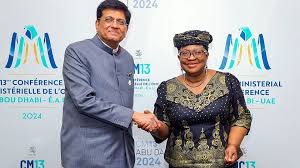
At the 14th World Trade Organization (WTO) Ministerial Conference, India delivered a firm call to prioritize agricultural and fisheries issues that directly impact the Global South. Commerce Minister representatives underscored that developing nations continue to face acute vulnerabilities in food security, rural livelihoods, and fair market access—areas where global trade rules must evolve more equitably.
India stressed that agriculture remains the backbone of many emerging economies, yet current WTO disciplines often constrain policy space needed for public stockholding, domestic support, and farmer safety nets. Delegates reaffirmed that food security schemes—especially those involving subsidized grain distribution—are essential for millions and should not be subject to punitive trade measures.
On fisheries, India highlighted the need for balanced regulations that curb illegal, unreported, and unregulated (IUU) fishing without unfairly burdening small-scale and artisanal fishers. Officials argued that any new agreement must account for historical responsibility and ensure that developing countries are not disadvantaged while industrial fleets from richer nations continue to dominate global waters.
India also urged WTO members to revive negotiations on longstanding agricultural reform, including special safeguard mechanisms that allow developing countries to protect farmers from import surges and price volatility.
Several countries from Africa, Asia, and Latin America supported India’s stance, noting that global trade frameworks must reflect contemporary realities—especially rising climate risks, supply chain disruptions, and continuing inequality in global markets.
As discussions continue, the conference has brought renewed attention to the urgent need for a fairer agricultural trade architecture—one that empowers the Global South while ensuring food security for all.


 By
By