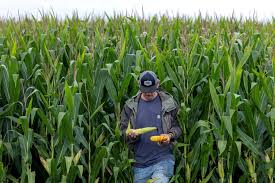
In a significant development for maize cultivation in northern India, farmers in Punjab have successfully achieved encouraging results in hybrid maize seed production for the first time. The initiative was undertaken by the ICAR–Indian Institute of Maize Research (ICAR-IIMR), Ludhiana, through a field-level demonstration conducted during the late kharif season.
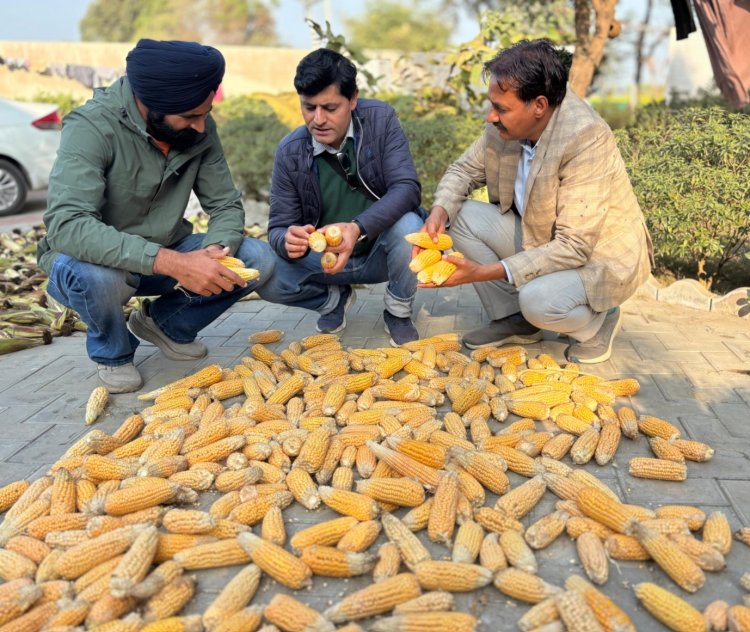
The successful trial was carried out in August sowing on the farm of Sharanvir Singh, a farmer from Gaziana village in Moga district. The demonstration focused on hybrid maize variety DMRH 1308, developed by ICAR-IIMR. According to the institute, the outcome confirms that hybrid maize seed production is feasible under Punjab’s agro-climatic conditions even during the late kharif period.
Scientists noted that this achievement opens new opportunities for local seed production in the state. The seeds produced during the late kharif season can be directly utilized for spring maize cultivation without incurring high storage costs, offering an additional economic advantage to farmers. Encouraged by the results, ICAR-IIMR plans to expand this initiative further during the upcoming spring season.
Experts highlighted that local seed production can significantly reduce dependence on seeds sourced from southern states such as Telangana and Andhra Pradesh, where nearly all hybrid maize seeds used in Punjab are currently produced. These seeds typically cost between ₹800 and ₹1,000 per kilogram during peak season, and additional transportation expenses further increase cultivation costs for northern farmers.
Hybrid maize seed production offers substantially higher returns compared to commercial grain production. Estimates suggest that farmers can earn nearly double the income through seed production, with potential earnings ranging from ₹2.5 lakh to ₹3 lakh per hectare. Reduced seed costs, lower cultivation expenses, and improved productivity are expected to collectively enhance farm profitability.
A team led by ICAR-IIMR Director Dr. H.S. Jat, along with senior maize breeder Dr. Bhupendra Kumar and research fellow Anisha, visited the field site to review harvesting operations. The team expressed satisfaction with the performance and yield, describing the results as highly encouraging.
This initiative marks an important step toward self-reliance in hybrid maize seed production in Punjab. Beyond providing direct economic benefits to farmers, it is expected to strengthen the supply of quality maize seeds for Punjab and neighboring states. ICAR-IIMR is also conducting similar demonstrations in Uttar Pradesh, Rajasthan, Jharkhand, Bihar, West Bengal, and Assam to diversify seed production across regions and reduce regional imbalances.

 By
By