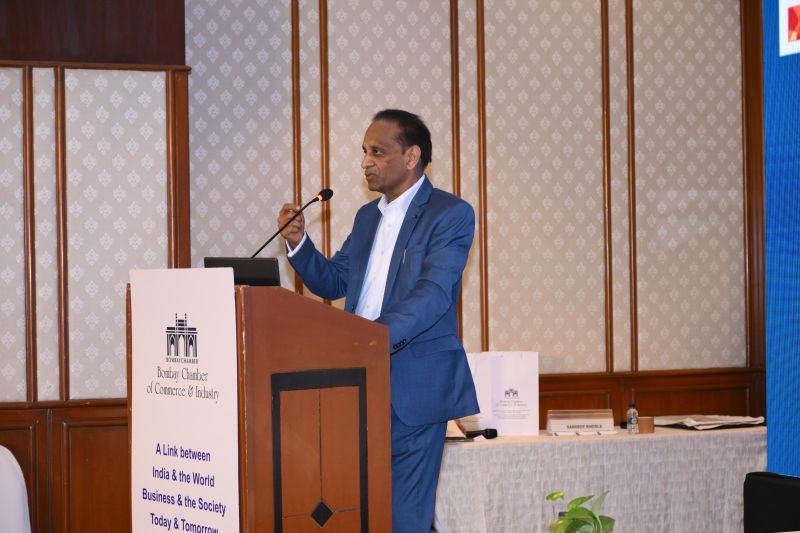
Naresh Kumar Pinisetti, President of Deepak Fertilisers and Petrochemicals Corp. Ltd., participated in a high-level seminar organised by the Bombay Chamber of Commerce & Industry (BCCI) in Mumbai, focusing on the implications of the recently implemented Labour Code.
The seminar brought together industry leaders, policymakers, and representatives of trade unions to deliberate on the transformative changes introduced under the Labour Code, aimed at simplifying India’s decades-old employment laws. Discussions centred on how these reforms are expected to reshape the industrial landscape, balancing the interests of employers and employees.
During the session, participants examined both the positive and potential challenges arising from the Labour Code. Key points included enhanced compliance mechanisms, streamlined processes for hiring and termination, improved worker welfare provisions, and the opportunities for businesses to adopt more flexible and modern HR practices. Simultaneously, the discussion also addressed concerns related to workforce adaptation, employee rights, and the transitional adjustments required by organisations to comply with the new regulations.
Naresh Kumar Pinisetti highlighted the need for collaboration between employers and trade unions to ensure a smooth transition and foster a work environment that benefits both the industry and its workforce. He emphasised that while the Labour Code aims to simplify regulatory frameworks, proactive engagement, training, and awareness initiatives are critical to maximise its positive impact.
The seminar concluded with a consensus that the Labour Code represents a significant step toward modernising India’s labour ecosystem. Industry leaders and trade unions acknowledged the potential of these reforms to promote industrial growth, strengthen compliance, and ensure employee welfare, provided there is careful implementation and continuous dialogue among all stakeholders.
This event reflects the proactive role of BCCI in facilitating discussions on policy reforms, helping businesses and workers adapt effectively to regulatory changes, and supporting India’s broader objective of creating a balanced, productive, and sustainable industrial environment.


 By
By