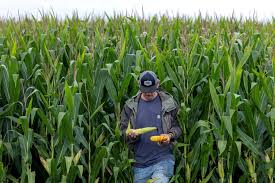
The U.S. farm sector has responded with mixed reactions to the recently announced $12 billion federal aid package aimed at supporting farmers affected by tariffs and global trade disruptions under former President Donald Trump’s trade policies. While the assistance provides short-term relief, many producers and industry groups argue that the package falls short of addressing the scale and depth of financial stress facing American agriculture.
Row-crop growers, particularly those producing soybeans, corn, and wheat, continue to experience significant pressure from weak commodity prices, rising input costs, and reduced export demand. Soybean farmers remain among the most affected, as retaliatory tariffs from key trading partners sharply curtailed exports, leaving excess supplies in the domestic market and depressing prices. Although government payments help offset some losses, producers contend they do not fully compensate for long-term market share erosion and income instability.
Debt levels across the farm sector remain elevated, with many growers relying on operating loans to manage cash flow amid prolonged periods of low profitability. Farm income volatility, coupled with higher interest rates and tightening credit conditions, has intensified concerns about farm solvency, particularly for small and mid-sized operations. Industry analysts note that while aid payments provide liquidity, they do not resolve underlying structural challenges related to market access and price competitiveness.
Farm organisations have also highlighted concerns over the distribution and adequacy of the aid. Some producers argue that payment limits and eligibility criteria may leave certain operations under-supported, while others emphasize that direct payments cannot replace the certainty of stable export markets. There is growing consensus that long-term solutions must focus on rebuilding trade relationships, expanding market diversification, and strengthening risk management tools rather than relying primarily on emergency assistance.
Supporters of the aid package point out that the funding demonstrates government recognition of the hardships faced by farmers during trade disputes. They argue that without such intervention, financial stress across rural America would be significantly worse. However, even among supporters, there is acknowledgment that the aid is a temporary measure rather than a comprehensive fix.
As trade uncertainties persist and global competition intensifies, U.S. farmers continue to call for policy clarity, improved market access, and sustainable pricing mechanisms. The response to the $12 billion aid package underscores a broader challenge facing American agriculture: balancing short-term financial relief with long-term strategies to restore competitiveness, profitability, and resilience in an increasingly complex global trade environment.


 By
By