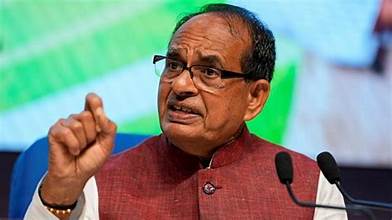
Union Agriculture Minister Shivraj Singh Chauhan unveiled a comprehensive agricultural roadmap for four districts of Madhya Pradesh—Sehore, Raisen, Vidisha, and Dewas—during the second day of the Advanced Agriculture Festival आयोजित in Raisen. The initiative aims to transform traditional farming practices into a more sustainable, diversified, and profitable system.
Addressing farmers and stakeholders, Chauhan stressed that agriculture must move beyond merely increasing production. He highlighted the importance of selecting suitable crops based on soil health, water availability, and local climatic conditions. He also inspected integrated farming models at the event and interacted directly with farmers, listening to their concerns and discussing solutions with agricultural experts.
The newly released roadmap focuses on key areas such as water management, crop diversification, value addition, and climate-resilient farming. It has been designed by considering the specific agro-climatic conditions of the four districts. Chauhan noted that excessive dependence on groundwater irrigation and declining soil health are major challenges in these regions. To address this, the roadmap promotes efficient water use and encourages farmers to adopt alternative crops instead of relying solely on wheat, paddy, and soybean.
Highlighting new opportunities, the minister suggested that farmers explore high-value crops such as tomato, onion, garlic, capsicum, pomegranate, dragon fruit, and avocado. He emphasized that proper planning and scientific farming practices can significantly increase farmers’ income.
In a major push toward digital agriculture, Chauhan also launched a Soil Mobile App, enabling farmers to access real-time information about nutrient requirements directly from their fields. He warned against the indiscriminate use of chemical fertilizers, stating that it not only increases costs but also degrades soil quality. He encouraged farmers to use Soil Health Cards and adopt balanced fertilization for better productivity and sustainability.
Another key announcement was the development of “Seed Villages” at the block level. Under this initiative, selected villages will produce high-quality seeds locally, ensuring timely availability for farmers. With support from Indian Council of Agricultural Research (ICAR), breeder seeds will be provided, potentially increasing crop yields by up to 20 percent.
Chauhan also spoke about establishing Clean Plant Centers to provide disease-free planting material and prevent losses caused by substandard seedlings. To improve farm mechanization, he proposed setting up Machine Banks and Custom Hiring Centers at the पंचायत level. These facilities will allow small and marginal farmers to access expensive agricultural machinery at affordable rates.
He further emphasized the need to strengthen post-harvest infrastructure, including cold chains, storage facilities, and pack houses, to reduce losses in perishable produce. Encouraging collective farming, he urged farmers to join Farmer Producer Organizations (FPOs) to improve market access and bargaining power. Value addition through processing—such as converting tomatoes into puree or powder—was also highlighted as a way to boost income.
Chauhan noted that under the guidance of Prime Minister Narendra Modi, continuous efforts are being made to modernize Indian agriculture. He assured that the roadmap would not remain on paper but would be implemented on the ground through coordinated efforts between central and state governments.
The minister concluded by stating that integrating scientific knowledge, technology, and local resources is the key to making agriculture both sustainable and profitable for farmers in the long run.

 By
By