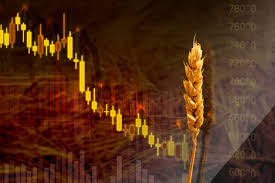
Recent data from the World Trade Organization (WTO) indicate that global trade in agricultural raw materials may expand more slowly than trade in other sectors, signaling a potentially cautious period for farm commodity markets. The WTO’s farm-raw-materials index currently sits below the baseline at 98.0, compared with the broader merchandise trade index, which remains slightly above trend.
“This points to more modest growth in agricultural exports in the near term,” said a WTO analyst. “While overall global trade continues to show resilience, agricultural commodities appear to be lagging behind, underscoring the need for careful supply-chain management and strategic planning.”
Several factors contribute to this slower growth trend. Rising input costs, climate-induced production uncertainties, and ongoing geopolitical tensions have all put pressure on farm commodity markets. Analysts also note that global food security concerns—amplified by climate change, land degradation, and crop uniformity—may influence trade patterns as countries prioritize domestic supply stability over exports.
Despite these headwinds, certain agricultural sectors continue to see steady demand. Regions with strong production capacity and diversified export portfolios may still benefit from favorable global commodity prices. However, the WTO report advises that exporters and policymakers should prepare for a period of modest growth, emphasizing risk mitigation and strategic investment in logistics, technology, and market access.
Global organizations, including the FAO, highlight that maintaining resilient and sustainable agricultural systems is critical not only for domestic food security but also for stable international trade. Innovations such as precision farming, climate-resilient crops, and digital agri-tech tools may help producers manage risks and optimize yields, providing some buffer against slower trade growth.
As nations navigate these challenges, experts stress the importance of coordinated policy measures, investment in agricultural infrastructure, and international collaboration. The WTO data serve as a timely reminder that, even as global trade grows overall, the agricultural sector faces unique pressures requiring careful planning, innovation, and adaptive strategies to ensure food security and stable market flows.

 By
By