

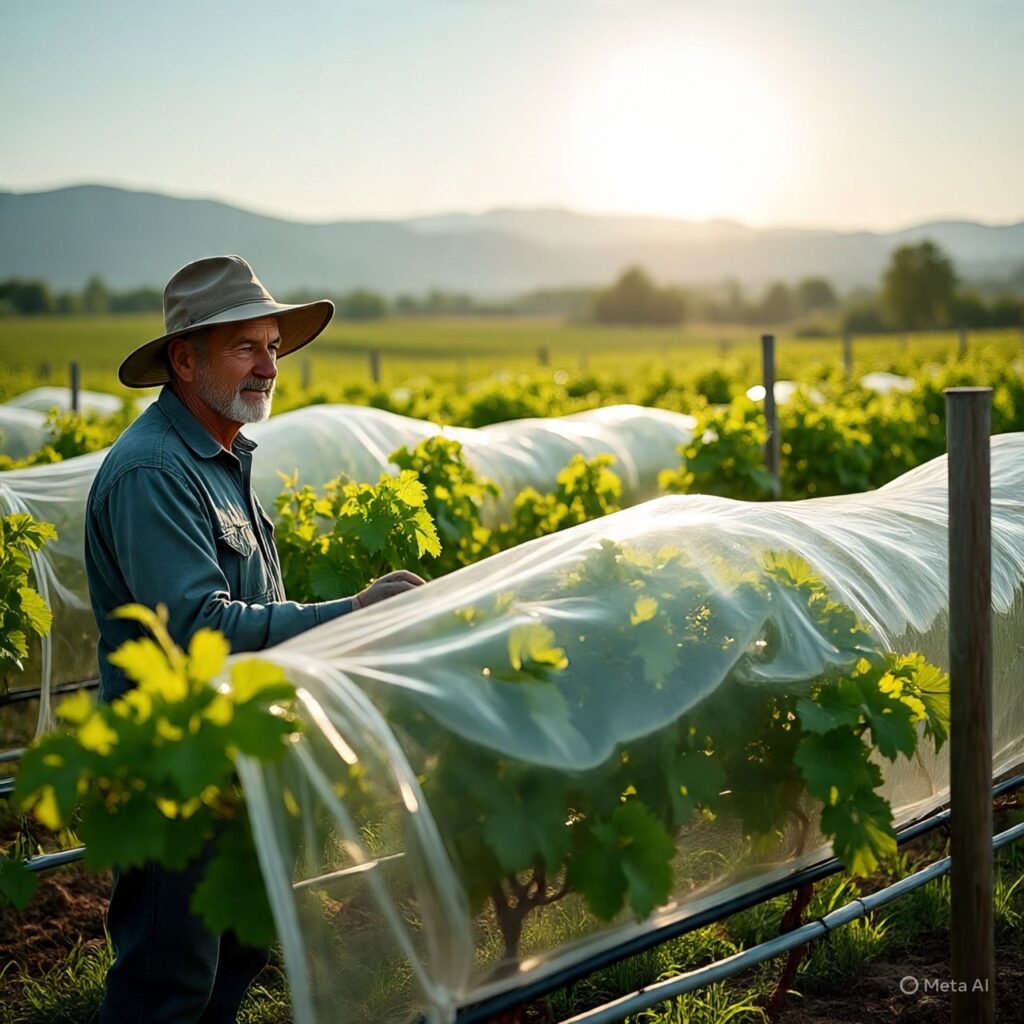
Agriculture in India, the backbone of the rural economy, has always been at the mercy of nature. For centuries, farmers have relied on predictable seasons, timely rains, and favorable weather to nurture their crops and earn a living. But today, as climate change continues to disrupt these age-old patterns, farming communities across India are facing unprecedented challenges — and perhaps none feel this more than the grape growers of Maharashtra.
In response to this growing crisis, the Maharashtra government has announced an ambitious Crop Cover Scheme to compensate grape farmers who are reeling under the impact of erratic weather patterns. The scheme aims to safeguard their livelihoods and provide a safety net in the face of unpredictable climate shocks. This article explores the story behind this announcement, the plight of grape growers, and why such a policy matters more than ever in a warming world.
The Changing Climate: A Growing Threat to India’s Orchards
Climate change is no longer a distant threat for India’s farmers — it is a lived reality. The rise in global temperatures, shifting rainfall patterns, unexpected hailstorms, and unseasonal downpours are devastating crops in nearly every state.
In Maharashtra, which leads India in grape production, these climatic shifts have become a serious challenge for thousands of growers who depend on vineyards for their livelihoods. Grapes, unlike some other crops, are extremely sensitive to temperature fluctuations and excess moisture. Even slight changes in weather can affect flowering, fruit set, sugar content, and ultimately, the quality and quantity of the harvest.
This year, once again, unseasonal rain and sudden weather changes have damaged vast stretches of vineyards, leaving many farmers worried about recovering their costs, let alone making any profit.
A Reality Check: How Much Grapes Matter to Maharashtra
Maharashtra is India’s undisputed grape capital. As per official data shared by the state’s Agriculture Minister Manikrao Kokate, over 1.23 lakh hectares of land in Maharashtra is under grape cultivation. This vast expanse produces nearly 24.89 lakh metric tonnes of grapes annually — a significant share of which is exported to international markets.
The grape belt of Maharashtra covers key districts like Nashik, Sangli, Solapur, Ahilyanagar, and Dharashiv. These regions are known for their high-quality table grapes and raisins, and they contribute significantly to the state’s agricultural income. For thousands of families, vineyards are not just an income source — they are an intergenerational heritage.
But this legacy is under threat as climate unpredictability intensifies.
When the Rain Comes at the Wrong Time
Normally, grape cultivation demands a dry climate during the harvesting months. Unseasonal rain, especially when the fruit is ready to be plucked, can cause bunch rot, fungal diseases, and quality deterioration. Heavy rainfall at flowering stages can reduce fruit set, while hailstorms can physically damage the vines.
This year, many vineyards suffered exactly this fate. Excess rain at critical stages resulted in crop losses, prompting farmers to raise their voices through their elected representatives.
It was during a debate in the Maharashtra Assembly that Rohit Patil, an MLA from the Nationalist Congress Party (Sharad Pawar faction), brought up the issue. He highlighted the hardships faced by grape growers due to sudden weather swings and asked the state government for concrete support.
The Government Responds: A New Crop Cover Scheme
In response, Agriculture Minister Manikrao Kokate announced that the Maharashtra government would roll out a dedicated Crop Cover Scheme to compensate orchard owners hit by climate vagaries. He acknowledged that grape growers are facing severe challenges due to changing weather and that the state cannot turn a blind eye to their plight.
According to the minister, a special meeting will be held soon to discuss practical measures to reduce climate-related risks for vineyards. The Pune-based National Research Centre for Grapes is already monitoring the situation and providing expert advice to farmers to mitigate damage and adopt climate-resilient practices.
More Than Compensation: Building Resilience
While the scheme will immediately provide monetary compensation, the long-term vision is to equip farmers with better tools to face the climate crisis. Here’s how the plan is expected to help grape farmers beyond just payouts:
✅ Insurance Partnerships: Insurance company representatives will be invited to design customized insurance products for grape vineyards, ensuring that future losses are covered swiftly and fairly.
✅ Weather Intelligence: The government has announced plans to set up weather stations in every village. With localized, real-time weather updates, farmers can plan irrigation, spraying, and harvesting more accurately, minimizing losses due to sudden weather changes.
✅ Scientific Support: Collaboration with the National Research Centre for Grapes will ensure that farmers get timely technical advice on pest and disease management, canopy management, and other practices that improve climate resilience.
✅ Awareness and Training: Educating farmers about new grape varieties that are better suited to withstand temperature variations, drought, or excess rain will be a key part of the plan.
Damage Assessment Already Underway
Minister Kokate confirmed that the government has already carried out panchanama (damage assessment surveys) in vineyards affected by untimely rain. Farmers whose crops have been surveyed and verified as damaged under existing government guidelines will receive compensation.
While this may not fully offset the losses farmers face, it provides a crucial safety cushion that helps them recover and prepare for the next season.
The Bigger Picture: India’s Battle with Climate Risk
Maharashtra’s move comes at a time when climate risk has emerged as one of the biggest threats to Indian agriculture. Extreme weather events, once considered rare, are now occurring with alarming frequency — floods in one state, droughts in another, hailstorms where they never happened before.
From rice and wheat to cash crops like grapes, mangoes, and apples — no crop is immune to the new climate reality. Farmers, who already struggle with price volatility, rising input costs, and market uncertainties, are now forced to grapple with the unpredictable whims of nature.
This has put immense pressure on governments to come up with innovative, farmer-friendly solutions that go beyond traditional relief payments.
Lessons from Other States
The idea of crop insurance or crop cover schemes is not new. The Pradhan Mantri Fasal Bima Yojana (PMFBY) is already India’s flagship crop insurance scheme. However, many farmers, especially orchard owners, often find that the compensation provided under generic schemes does not fully reflect their unique crop risks.
Fruit crops like grapes have high input costs, longer gestation periods, and are more vulnerable to even slight weather anomalies. Maharashtra’s new plan appears to be a step towards designing more customized solutions for such high-value crops.
Farmers Welcome the Move — But Ask for More
Farmer groups and horticulture experts have largely welcomed the announcement of the new crop cover scheme. Many believe that this is a much-needed recognition of the specific challenges orchard owners face.
However, farmer unions stress that compensation should be timely, adequate, and easy to claim. Often, delays in damage assessments, paperwork hurdles, and disputes over the extent of loss mean that relief reaches farmers too late to make a real difference.
Grape growers have also demanded better cold storage facilities, improved supply chains, and export support to get fair prices when domestic market prices crash due to sudden oversupply caused by climate swings.
Beyond Grapes: What Next?
While the current focus is on grapes, the broader question is whether Maharashtra will extend similar schemes to other orchard crops like pomegranates, oranges, or mangoes — all of which are important horticultural exports and equally vulnerable to climate variability.
Experts argue that a comprehensive climate-risk framework must be developed for all horticulture crops, combining insurance, research, weather forecasting, and post-harvest support.
Empowering Farmers with Weather Intelligence
One of the most encouraging parts of Maharashtra’s plan is the push to establish weather stations at the village level. Access to real-time, hyper-local weather data can be a game changer.
Timely alerts about rainfall, temperature drops, or hailstorm risks can help grape growers take quick actions, like spraying protective solutions or harvesting early to avoid major losses. This proactive approach is a crucial step in moving from relief to resilience.
The Road Ahead: Turning Crisis into Opportunity
Climate change will continue to test India’s agricultural systems in the years to come. But it also offers an opportunity to innovate and transform.
For grape growers, this means adopting advanced canopy management, rain shelters, water-saving irrigation, and disease-resistant grape varieties. Governments, research institutions, and farmers must work together to make vineyards not just productive but resilient.
Conclusion: A Model for Climate-Smart Agriculture
The Maharashtra government’s Crop Cover Scheme for grape farmers marks an important step in acknowledging the unique risks that orchard owners face in the era of climate change. By combining immediate compensation with long-term strategies like weather monitoring and insurance tie-ups, the state is setting an example for how India’s agriculture can adapt.
If implemented well, this model could inspire other states to design similar support systems for vulnerable crops and help India’s farmers face climate change not with fear — but with resilience and hope.


 By












