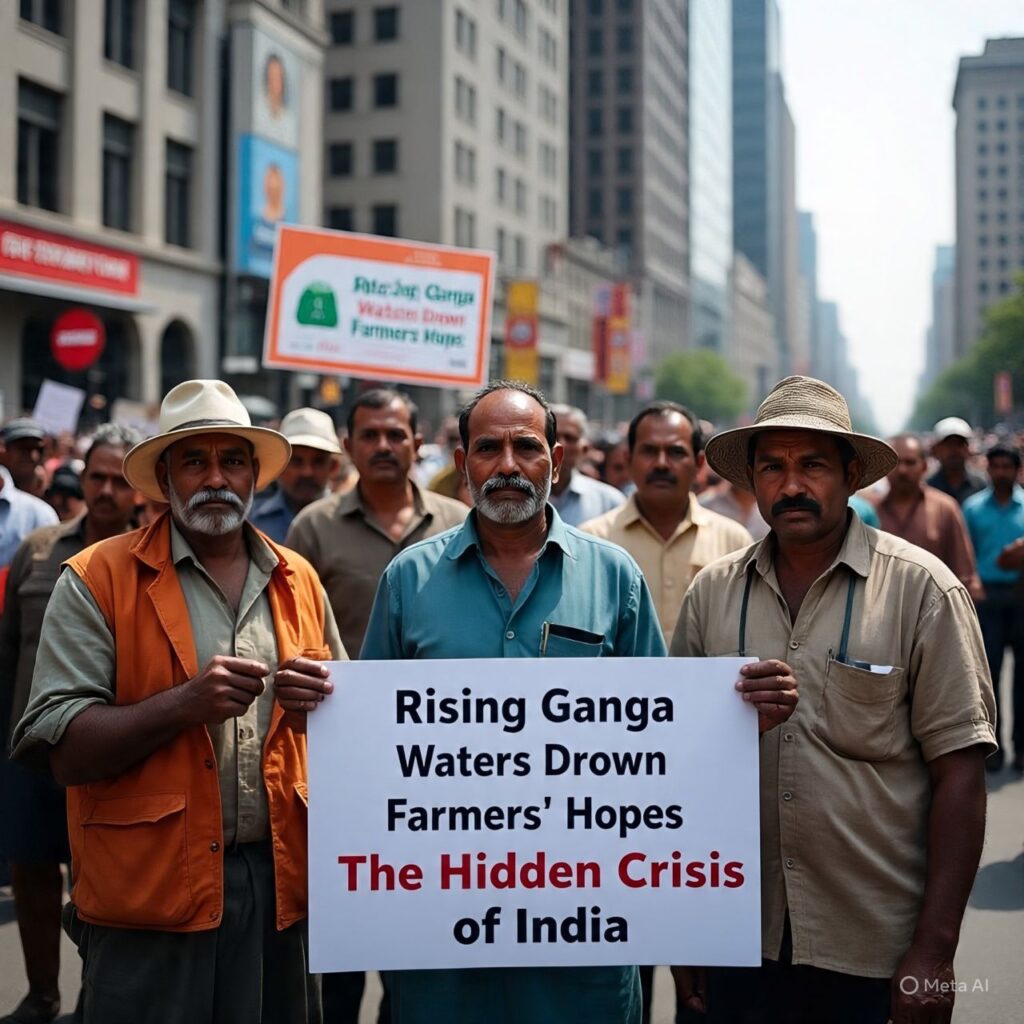
Each year, the mighty Ganga nourishes millions across India’s plains. Its waters irrigate fertile lands, recharge groundwater, and sustain life. But when the Ganga rises beyond its banks during the monsoon, it brings not just life — but destruction. For thousands of small vegetable farmers living and working on its fertile floodplains, these swollen waters are both a blessing and a curse.
This monsoon, once again, the Ganga’s rising water level has submerged vast stretches of farmland along its banks. Fields once lush with green vegetables now lie underwater. Farmers who once hoped for a good harvest and better prices find themselves watching helplessly as their hard work gets washed away overnight.
Floodplain Farming: A Double-Edged Sword
The fertile floodplains of the Ganga are among the most productive agricultural zones in India. Centuries-old layers of alluvial soil make these lands ideal for growing a wide range of vegetables — from leafy greens and gourds to potatoes, tomatoes, and cucumbers. The soil’s natural fertility often means fewer fertilizers are needed, and the easy access to water reduces the cost of irrigation.
For thousands of families, especially small and marginal farmers, this makes floodplain farming attractive. They grow seasonal vegetables and earn quick returns by selling fresh produce in nearby towns and cities. The cash income helps them run their households, pay debts, and fund their children’s education.
But there’s a catch. When the Ganga swells — as it inevitably does every year during the monsoon — these same fertile lands become the first to drown.
This Season: Water In, Hopes Out
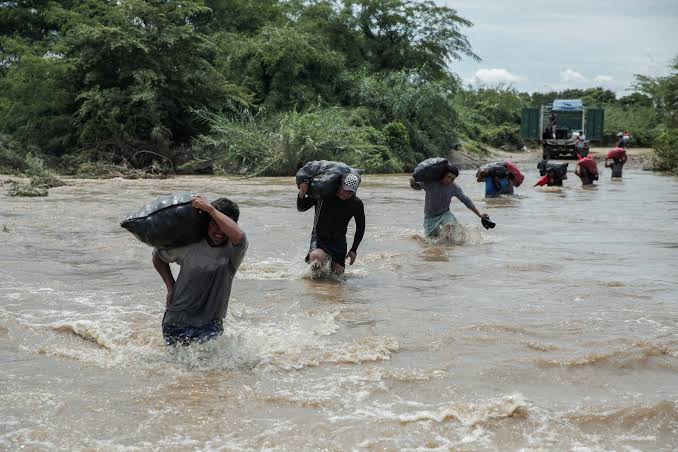
As the rains intensified this year, the Ganga’s level rose rapidly. For the farmers, there was little warning — one day the fields were dry enough to harvest, the next they were soggy, and within days, under several feet of water.
Fields full of brinjals, bottle gourds, pumpkins, okra, and leafy vegetables have been submerged. Roots rot underwater; tender shoots decay. Insects and fungal diseases spread rapidly in stagnant water. For many farmers, salvaging any part of the crop is impossible.
To make matters worse, this was the window when vegetable prices were expected to rise. As farmers say, “Whenever the prices go up, we have no vegetables left to sell.” It’s a cruel cycle: when harvest is ready, the market price is too low. When the price improves, the crop is gone — either harvested too early, lost to pests, or washed away by floods.
Low Prices, Rising Costs
This year, many vegetable farmers have a double whammy: not only are their fields submerged, but the market price they got for early harvests was lower than their input costs. Seeds, fertilizers, labour, transport — all these costs have climbed, but the prices for produce have not kept pace.
The result? Farmers are staring at a loss. Many say they will struggle to recover even their basic investment this season. For smallholders with no savings cushion, this means taking new loans — often at high interest — just to plant again.
Why Are Floods So Damaging for Vegetable Farming?
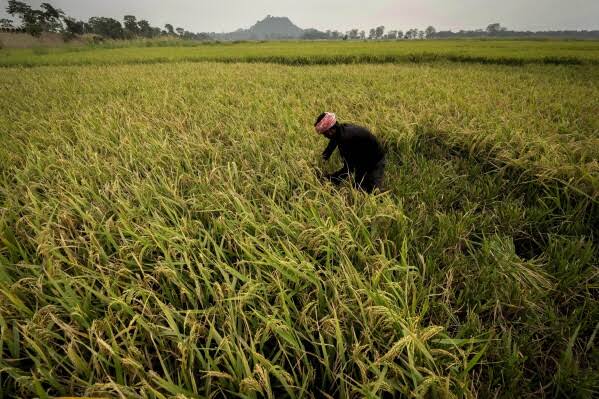
Vegetables are delicate. Unlike hardy cereals like paddy which can survive submerged conditions for days, most vegetables have shallow roots that suffocate quickly in standing water. Heavy rain and floodwater also bring silt and debris that damage plants and spread disease.
Additionally, vegetables have a short harvest window. If a farmer misses it due to floodwater or transport problems, the crop rots. Unlike grains, vegetables cannot be stored for months — they must be sold fresh, or they lose all value.
This makes vegetable farming along rivers extremely high risk during the monsoon.
Farmers’ Voices: A Cry for Help
For vegetable farmers in Ganga’s floodplains, the story is the same from Bihar and Uttar Pradesh to West Bengal. Many have started questioning if it’s worth the risk at all.
One farmer near Patna puts it simply:
“I planted bottle gourd, ridge gourd, and brinjal on two acres. When the price was low, I sold cheap. Now when the price is good, my whole field is under water. Next season, I’ll have to borrow again. How many times can we bear this loss?”
Farmers are also frustrated that despite repeated promises, they rarely get timely compensation for crop losses. Insurance schemes exist on paper but are often slow, inadequate, or full of paperwork. Many marginal farmers don’t even enroll due to lack of awareness or trust.
How Can Farmers Cope?
While floods cannot be prevented entirely, their impact can be reduced. Agricultural scientists and extension workers have long recommended certain practices for flood-prone areas. But awareness and adoption remain patchy. Here are some solutions that could help:
1. Raised Bed and Ridge Planting
Like in maize farming, raised beds can be used for vegetables too. By planting crops on slightly elevated ridges, roots are less likely to be submerged. Water drains into furrows, protecting plants during short-term waterlogging.
2. Flood-Resistant Varieties
For some vegetables, varieties with deeper roots or shorter maturity periods can help reduce damage. Quick-growing varieties can be harvested before peak flood levels hit.
3. Staggered Planting
Instead of sowing all crops at once, planting in batches over weeks spreads the risk. Even if an early crop is lost, later batches may survive once floodwaters recede.
4. Community Drainage
In some villages, collective efforts to create better field drainage — such as small canals, check dams, or field bunding — can help excess water move out faster.
5. Protected Cultivation
While polytunnels or greenhouses may not stop floodwaters entirely, they can protect young seedlings and improve crop recovery once water recedes.
6. Insurance That Works
More awareness about crop insurance, faster payouts, and easier claim processes can give farmers a safety net. Technology like satellite data and drone surveys can speed up damage assessment.
The Bigger Question: Why Do Prices Crash for Farmers?
Floods are only part of the pain. The bigger issue for vegetable farmers is the mismatch between what the consumer pays and what the farmer earns.
In urban markets, vegetable prices often shoot up during floods due to supply shortages. But the farmers whose crops survived rarely benefit fully. Middlemen, traders, and transport costs eat away much of the profit. Meanwhile, distressed farmers sell whatever they can harvest at throwaway rates to avoid total loss.
Experts have long argued for stronger farmer producer organizations (FPOs), better cold chains, and direct farm-to-market linkages to ensure that farmers get a fair share of the final price. Without this, floods will continue to hurt farmers twice — once in the field, and again at the market.
Governments and NGOs: What More Can Be Done?
State governments have schemes for flood relief, crop compensation, and input subsidies. But delivery remains a challenge. Speed is critical — farmers can’t wait months for aid when debts are due now.
Local training programs on climate-smart farming, emergency relief kits (like pumps and drainage tools), and community awareness about water management can also help.
NGOs working in flood-prone areas often build community grain banks and small storage solutions so that families do not go hungry when crops fail.
Long-Term Thinking: Sustainable Floodplain Farming
Not all flooding is bad. Controlled, seasonal flooding replenishes soil nutrients and supports fisheries. In fact, some communities have traditionally adapted to “flood farming” — growing crops like deepwater rice or using fish-cum-vegetable models.
Going forward, experts say India needs more “living with floods” strategies — policies that combine modern science with traditional knowledge. Agroforestry, diversifying crops, switching to less flood-sensitive crops during peak monsoon, and strengthening embankments where necessary are all part of this bigger picture.
A Call for Resilience
In the end, the Ganga’s rise cannot be stopped entirely. But its impact can be managed better with knowledge, planning, and timely support.
Vegetable farmers are among the hardest working, most innovative groups in India’s agriculture system. They take on high risks to supply the daily greens that feed cities. Yet they remain among the most vulnerable — with their livelihoods at the mercy of weather and markets alike.
If India wants to secure its food supply and rural incomes, it must listen to these farmers’ stories. It must invest not just in mega-projects but in small, practical steps that help farmers stand firm when the Ganga rises.
Conclusion
As climate change accelerates, extreme weather events like floods will only become more frequent. Farmers on the banks of India’s great rivers will continue to face this age-old battle — a battle they can win only with better support systems, smart practices, and fair markets.
From raising awareness about better planting techniques to ensuring that compensation reaches them in time, every effort counts. Because when the waters recede, what remains behind is not just silt and damaged fields — but also the resilience and hope of India’s vegetable farmers, ready to sow again, season after season.


 By