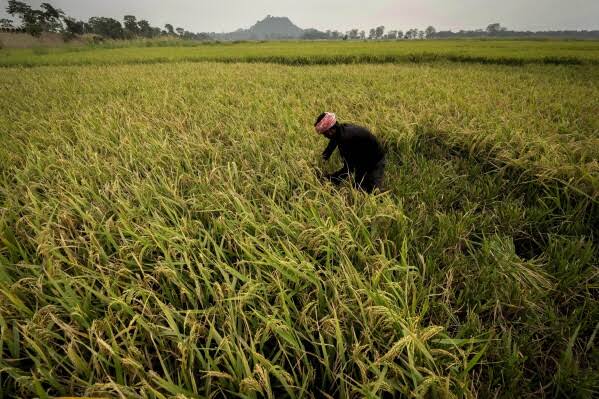
The Punjab Agricultural University (PAU) has issued an important advisory for rice farmers across Punjab, urging them to remain vigilant against rice dwarfing disease, a potentially devastating viral infection threatening paddy crops during the ongoing 2025 kharif season.
The disease, caused by the Southern Rice Black-streaked Dwarf Virus (SRBSDV), had previously wreaked havoc in 2022, especially in districts like Fatehgarh Sahib, Patiala, Hoshiarpur, Ludhiana, Pathankot, SAS Nagar, and Gurdaspur. Infected plants show signs of severe stunting, with narrow and upright leaves, poor shoot and root development, and overall reduced plant height often to just a third of the normal size. In extreme cases, infected plants may even die, causing heavy yield losses.
PAU experts have highlighted that early identification and timely intervention are critical in preventing the spread of this disease. Farmers have been encouraged to report any unusual dwarfing symptoms in their fields to the nearest Krishi Vigyan Kendra (KVK) or directly to PAU for expert assistance.
According to Dr. P.S. Sandhu, Head of the Department of Plant Pathology, PAU scientists are actively monitoring paddy fields and nurseries. “So far, no infections have been found in surveyed areas this season, but continued vigilance is essential,” he said.
The whitebacked planthopper (WBPH), a common insect in Punjab’s rice-wheat cropping system, is identified as the primary vector responsible for spreading SRBSDV. Dr. K.S. Suri, Principal Entomologist at PAU, advised farmers to carry out weekly field checks, especially in young paddy fields and nurseries. He suggested using the tap-and-check method gently tapping the base of plants to dislodge hidden insects, which can then be spotted on the water surface.
In case of WBPH detection, Dr. Suri recommended judicious use of PAU-approved insecticides:
- Pexalon 10 SC (triflumezopyrim) – 94 ml/acre
- Ulala 50 WG (flonicamid) – 60 g/acre
- Osheen/Dominant/Token 20 SG (dinotefuran) – 80 g/acre
- Imagine 10 SC / Viola 10 SC (fluprimin) – 300 ml/acre
- Orchestra 10 SC (benzpyrimoxan) – 400 ml/acre
- Chess 50 WG (pymetrozine) – 120 g/acre
These should be sprayed using 100 litres of water per acre, focusing on the base of the plants using flat-fan or hollow cone nozzles for best results. However, he also warned against indiscriminate pesticide use, which can lead to pest resistance and ecological imbalance.
Additionally, Dr. M.S. Bhullar, Director of Extension Education at PAU, cautioned that zinc deficiency in rice fields can mimic virus symptoms like stunted growth and reduced tillering. He stressed the importance of getting expert consultation for accurate diagnosis and advised the use of balanced fertilizers to ensure healthy crop growth.
Backing this, Dr. A.S. Dhatt, Director of Research at PAU, stated that the university is fully prepared to detect and respond to any SRBSDV outbreak. He emphasized that PAU is also monitoring weeds and alternative host plants that could harbor the virus. He encouraged farmers to regularly follow PAU advisories and extension bulletins for timely updates and best practices on disease and pest management.


 By