

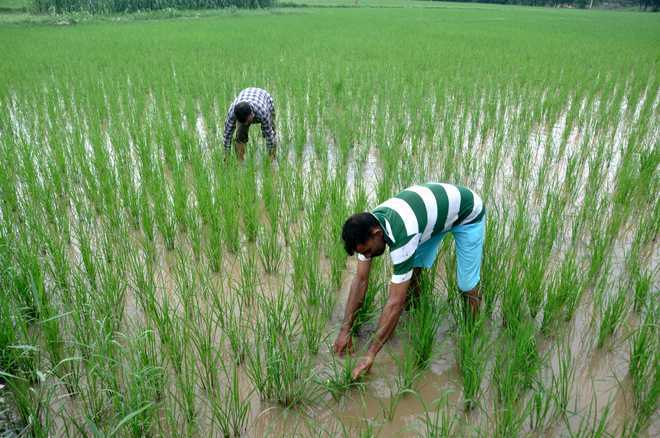
Assam is staring at a severe agricultural crisis as prolonged dry spells have devastated large tracts of paddy cultivation across the state. With scant rainfall disrupting the crucial sowing and transplanting season, the state government has officially sought central assistance to help distressed farmers cope with the mounting losses.
Chief Minister Himanta Biswa Sarma on Thursday confirmed that the state has submitted a detailed report to the Centre, highlighting the extent of crop damage, particularly in lower and central Assam districts. Over 2.5 lakh hectares of paddy fields have been affected so far, with many farmers unable to complete transplantation due to a critical shortage of water.
“This is an unprecedented situation. The monsoon has been extremely erratic, and in some districts, the rainfall deficit is over 40%. We are requesting urgent financial support from the central government to ensure timely compensation and relief for our farmers,” the Chief Minister stated during a media briefing in Dispur.
Agriculture officials say that districts such as Nagaon, Morigaon, Barpeta, and Dhubri are among the worst hit. In these areas, many farmers have already begun to report total crop failure, while others are being forced to shift to less water-intensive alternatives like pulses or oilseeds. The lack of rainfall has also impacted groundwater recharge and hampered irrigation efforts, making the situation even more precarious.
In response to the growing crisis, the Assam government has initiated contingency measures, including the distribution of drought-resilient seeds, expansion of irrigation through pump sets, and the provisioning of diesel subsidies to run water pumps. Additionally, local administrations have been instructed to conduct field-level crop damage assessments, which will serve as the basis for compensation under various disaster relief schemes.
Farmer groups and agricultural unions across the state have welcomed the government’s swift action but are urging both the state and central governments to act faster, fearing that delays in aid could push small and marginal farmers into debt or force them to abandon farming altogether.
Experts from the Assam Agricultural University have also warned that the delayed transplanting window is fast closing, and unless there is a significant change in weather patterns within the next two weeks, the kharif season could face irreversible damage.
As Assam waits for a response from the Centre, all eyes are now on the Indian Meteorological Department’s upcoming monsoon forecast. For thousands of paddy growers across the state, the next few weeks will be crucial in determining whether they can salvage their crop—or brace for one of the worst agricultural setbacks in recent memory.


 By












