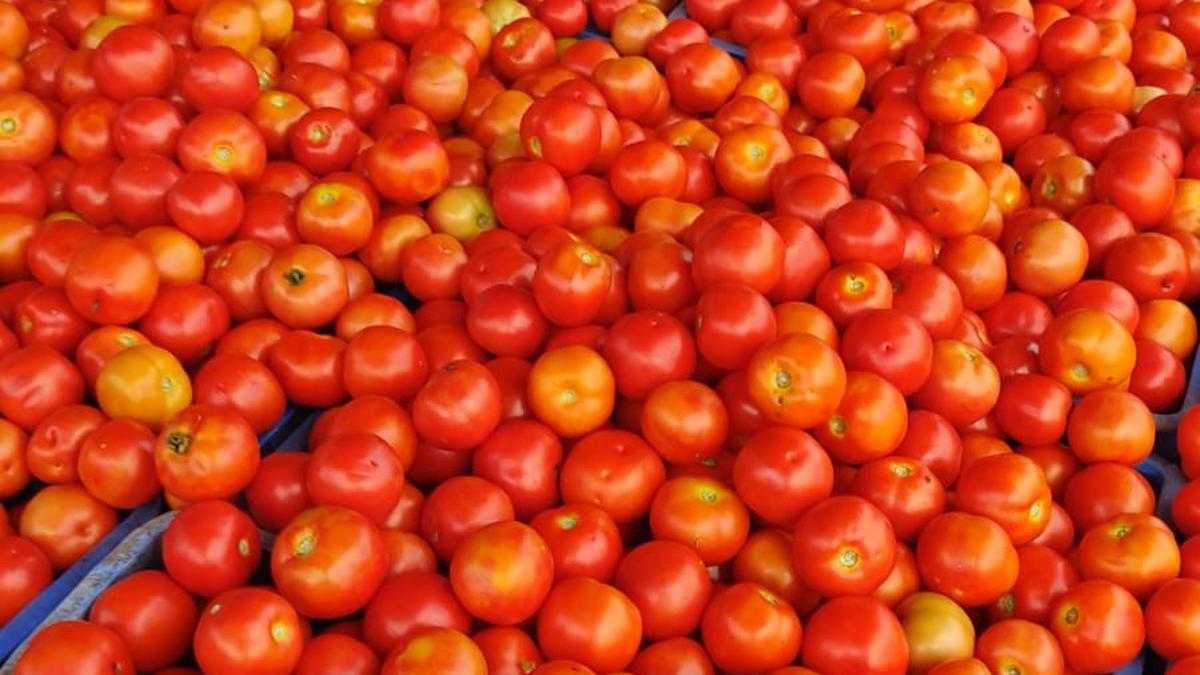
Tomato prices in Andhra Pradesh have surged sharply in recent days, creating concern among both consumers and farmers. In many parts of the state, tomatoes are now being sold at ₹60 per kilogram in retail markets, while government-run Rythu Bazaars are offering them at a slightly reduced price of ₹45 per kilogram. The sudden spike has put pressure on household budgets, particularly for families that rely heavily on vegetables in their daily meals.
The price rise is largely attributed to heavy rains that recently hit key tomato-growing regions such as Madanapalle and Anantapur. The unexpected downpours damaged standing crops and severely disrupted the transportation of produce to wholesale markets. With muddy fields and flooded roads delaying harvesting and shipments, supply chains were thrown off balance, leading to scarcity in many urban and rural outlets.
However, this situation has brought a silver lining for farmers. Just a few months ago, in February 2025, tomato prices had crashed to as low as ₹2 to ₹3 per kilogram in places like Vijayawada, Srikakulam, and Nellore. The low prices had pushed farmers to the brink, with many forced to leave their crops to rot or dump their produce. At that time, the state government had intervened by purchasing tomatoes at ₹8 per kilogram and distributing them through Rythu Bazaars ensuring some relief for distressed farmers.
Now, with prices swinging to the other extreme, the government is once again stepping in to prevent exploitation and ease the burden on consumers. Authorities are closely monitoring wholesale markets and deploying procurement teams to ensure adequate tomato supplies at fair prices. Officials have warned traders against hoarding and price manipulation, and they are working to move fresh stocks from the farms to city outlets as quickly as possible.
This kind of seasonal volatility is not new to Andhra Pradesh. Tomato prices often experience sharp ups and downs due to factors like unseasonal rains, pest attacks, excessive heat, and inconsistent planting schedules. Because tomatoes are highly perishable and cannot be stored for long, even a minor disruption in supply can cause a major jump in retail prices.
For everyday consumers, these swings create a frustrating situation—just months ago, vendors were discarding tomatoes due to oversupply, and now, prices are high enough to impact daily kitchen planning. Experts say the only long-term solution is to strengthen cold storage facilities, invest in better logistics, and encourage forward contracts and market linkages that give farmers more control over pricing.
Despite the current challenges, officials believe that prices will stabilize in the coming weeks as transportation routes reopen and the next wave of tomato harvests reaches the markets. Until then, the government has assured the public that it will continue to act swiftly to balance the interests of both producers and consumers.
In the broader picture, the tomato price rollercoaster once again highlights the urgent need for a more resilient and predictable agricultural supply chain in Andhra Pradesh one that can weather climate shocks, protect farmer incomes, and ensure affordable food for all.


 By
By