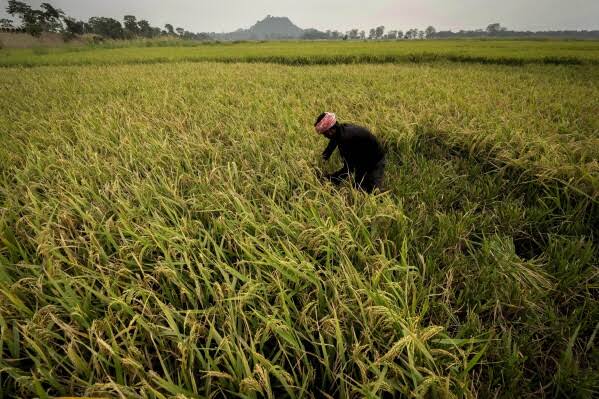
In a major push to secure food security and enhance farm incomes, India has ramped up efforts to boost rice yields across the country, focusing on a combination of improved seed varieties, sustainable farming practices, and climate-resilient technologies. As the world’s largest exporter and the second-largest producer of rice, India’s success in raising paddy productivity is seen as critical not only for domestic consumption but also for meeting global demand.
With the looming threat of climate change, especially erratic rainfall patterns and rising temperatures, traditional rice farming is under stress. In response, the Ministry of Agriculture has partnered with agricultural research bodies like the Indian Council of Agricultural Research (ICAR) and state agricultural universities to promote high-yielding and drought-tolerant rice varieties such as PR126, DRR Dhan 50, and Sahbhagi Dhan. These new varieties are being distributed through government schemes like the National Food Security Mission (NFSM), which has been pivotal in scaling up their adoption across rice-growing states.
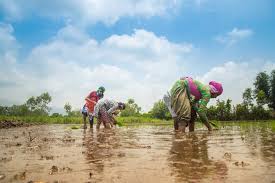
One of the key strategies involves encouraging the System of Rice Intensification (SRI)—a method that uses less water, fewer seeds, and promotes better root growth and plant spacing. Farmers practicing SRI in states like Tamil Nadu, Chhattisgarh, and Odisha have reported 30–40% increases in yield compared to conventional methods, while also saving on inputs like fertilizers and water. Extension officers are now actively training farmers to adopt this system through field demonstrations and mobile-based advisory services.
In addition to agronomic improvements, the government is also pushing for mechanization and the use of digital technologies in rice farming. Tools like precision seeders, mechanical transplanters, and drone-based spraying are being introduced through Custom Hiring Centres (CHCs), especially targeting small and marginal farmers who can’t afford expensive equipment individually. Real-time data on soil health, weather patterns, and crop stages are now being made available via platforms like the Kisan Sarathi app, helping farmers make more informed decisions.
To reduce post-harvest losses and improve market access, storage facilities and procurement systems have also been strengthened. The Food Corporation of India (FCI) has expanded its procurement operations in key states like Punjab, Haryana, Telangana, and Uttar Pradesh, ensuring that farmers receive Minimum Support Price (MSP) in a timely manner. Furthermore, under the PM-AASHA scheme, additional procurement channels and price deficiency payments are helping stabilize farmer income, especially during years of market fluctuations.
Another important dimension is the push for organic and sustainable rice cultivation in tribal and rainfed areas. States like Chhattisgarh, Jharkhand, and Assam have launched initiatives to promote traditional rice varieties that require fewer inputs and have higher nutritional value. These varieties are being linked to niche export markets and value-added products, creating new income streams for local communities.
Experts believe that these combined efforts could help India increase its average rice yield from the current 2.8 tons/hectare to over 3.5 tons/hectare within the next five years. This would not only reduce dependence on imports for certain rice types like aromatic basmati but also improve the country’s resilience to price shocks and climatic uncertainties.
As global rice prices remain volatile and several countries place restrictions on exports due to climate-induced shortages, India’s drive to increase rice productivity takes on even greater significance. With the right mix of science, policy, and farmer engagement, the country is poised to lead the way in climate-smart rice cultivation, ensuring food security for millions while also supporting livelihoods in rural India.


 By
By