Kharif 2025 Crop Sowing Crosses 1039 Lakh Hectares, 37 Lakh Hectares Higher Than Last YearThe Department of Agriculture and Farmers’ Welfare has released the latest data on Kharif crop sowing as on August 15, 2025, showing a significant increase in overall coverage compared to the previous year. The total sown area stands at 1039.81 lakh hectares, up by 37.39 lakh hectares from the same period in 2024.
Major Highlights of Crop-Wise Progress
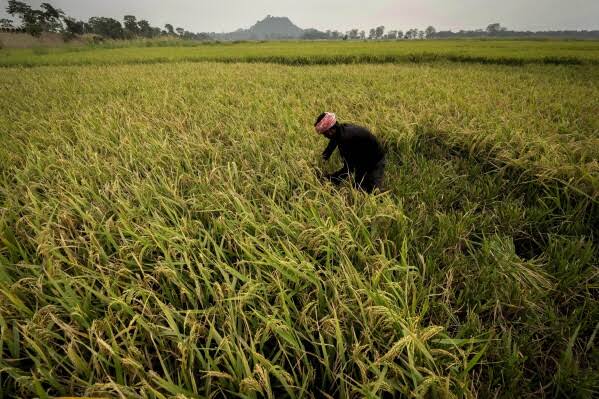
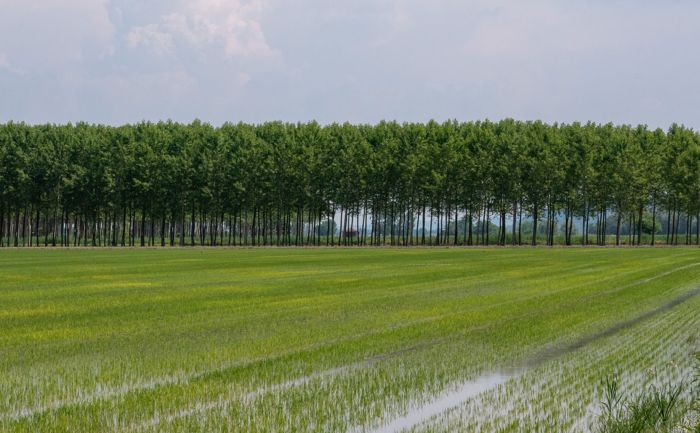
- Rice: Sown over 398.59 lakh hectares, marking a sharp rise of 35.67 lakh hectares compared to last year (362.92 lakh hectares). Rice continues to dominate Kharif cultivation.
- Pulses: Covered 109.52 lakh hectares, slightly higher than last year’s 108.39 lakh hectares. Within pulses:
- Tur (Arhar) saw a decline of 1.34 lakh hectares.
- Urad and Moong gained 0.92 and 0.94 lakh hectares respectively.
- Minor increases were recorded in Kulthi, Moth Bean, and Other Pulses.
- Coarse Cereals: Reported strong growth at 182.34 lakh hectares, up by 9.12 lakh hectares.
- Maize showed the biggest jump with an increase of 9.82 lakh hectares, reaching 92.79 lakh hectares.
- However, Jowar, Bajra, and Ragi recorded slight declines.
- Oilseeds: Registered a dip at 178.64 lakh hectares, down by 6.74 lakh hectares compared to last year’s 185.38 lakh hectares.
- Soybean declined by 4.77 lakh hectares, and Groundnut by 2.09 lakh hectares.
- Castor seed recorded a positive increase of 1.21 lakh hectares.
- Sugarcane: Sown over 57.31 lakh hectares, higher by 1.64 lakh hectares compared to last year.
- Jute & Mesta: Slightly lower at 5.54 lakh hectares, a decrease of 0.19 lakh hectares.
- Cotton: Covered 107.87 lakh hectares, showing a decline of 3.24 lakh hectares compared to last year.
Overall Scenario
The overall increase in sowing is attributed mainly to higher rice and maize coverage, which together offset the decline seen in oilseeds and cotton. The cumulative area of 1039.81 lakh hectares remains close to the normal Kharif coverage level of 1096.65 lakh hectares (average of 2019–20 to 2023–24).
This year’s data indicates promising prospects for food grain production, particularly in rice and coarse cereals, while oilseed and cotton production may require close monitoring due to reduced acreage.


 By
By