

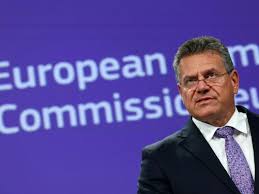
Australia’s Trade Minister is in Brussels for high-level negotiations aimed at securing a stronger free trade agreement (FTA) with the European Union, a development that could have significant implications for Australia’s agricultural export sector—particularly beef and sheep meat.
The negotiations are viewed as critical for expanding Australia’s market access to the 27-member EU bloc, one of the world’s largest and most regulated consumer markets. While Australia is a major global exporter of red meat, its current access to the EU is constrained by tariff-rate quotas, strict sanitary and phytosanitary (SPS) standards, and complex certification requirements.
A key focus of the talks is improving quota volumes and reducing tariffs on beef and sheep meat exports. Industry stakeholders argue that enhanced access would allow Australian producers to diversify export destinations, reduce reliance on Asian markets, and capture premium segments in Europe, where demand for high-quality, traceable meat products remains strong.
However, negotiations are expected to be complex. The EU maintains rigorous environmental, animal welfare, and sustainability standards, which have become central to trade discussions. European farmers have also expressed concerns about increased competition from imported agricultural products. As a result, discussions are balancing commercial opportunities with regulatory alignment and political sensitivities.
For Australia, a favorable agreement could significantly strengthen rural incomes and reinforce the competitiveness of its livestock industry. The red meat sector is a major contributor to Australia’s agricultural export revenue, supporting regional employment, supply chains, and value-added processing industries.
Trade analysts note that beyond market access, the FTA could include cooperation on sustainability frameworks, geographical indications (GIs), and climate-related agricultural policies. Addressing these non-tariff measures will be as important as negotiating tariff reductions.
The outcome of the Brussels talks could shape the future trajectory of Australia–EU trade relations. A strengthened agricultural agreement would not only expand export opportunities but also position Australian producers more firmly within high-value European markets, potentially delivering long-term strategic benefits for the nation’s agricultural sector.


 By
By











