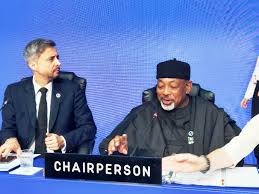
Abubakar Kyari, Nigeria’s Minister of Agriculture and Food Security, has been elected Chairperson of the Governing Council of the International Fund for Agricultural Development (IFAD), marking a significant milestone for Nigeria’s role in global agricultural development and food security governance.
The IFAD Governing Council is the organization’s highest decision-making body, comprising representatives from member states worldwide. It is responsible for shaping policy direction, approving budgets, and guiding strategic priorities aimed at reducing rural poverty and strengthening agricultural systems in developing countries. Kyari’s election places Nigeria at the forefront of international deliberations on sustainable agriculture, rural transformation, and climate-resilient food systems.
His appointment comes at a critical time when global food systems are facing mounting challenges, including climate change, supply chain disruptions, rising input costs, and food insecurity in vulnerable regions. As Chairperson, Kyari will preside over council sessions, facilitate consensus among member nations, and support policy frameworks that enhance smallholder productivity, rural livelihoods, and agricultural financing mechanisms.
Nigeria’s increased representation in IFAD’s leadership is widely seen as a boost to Africa’s voice in global agri-development dialogues. The continent remains central to global food security discussions, given its growing population, vast arable land resources, and the urgent need for investment in rural infrastructure, mechanization, and value-chain development.
Kyari’s leadership may also strengthen collaboration between IFAD and African nations in advancing initiatives such as climate-smart agriculture, youth engagement in agribusiness, digital extension services, and inclusive rural finance. Nigeria itself has been pursuing reforms aimed at improving domestic food production, reducing import dependency, and enhancing resilience across its agricultural sector.
IFAD, a specialized United Nations agency, plays a pivotal role in financing rural development projects that empower smallholder farmers and marginalized communities. With Kyari at the helm of the Governing Council, stakeholders expect enhanced dialogue between developing economies and global partners on sustainable agricultural investment and poverty reduction strategies.
His election signals growing recognition of Nigeria’s commitment to agricultural transformation and underscores the country’s expanding influence in shaping the future of global food and rural development policies.


 By